
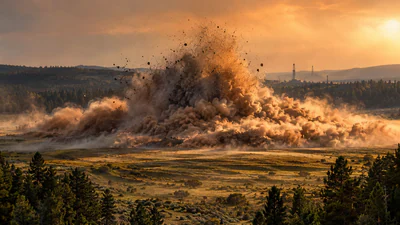
Department of Energy , the Atomic Energy Commission detonated a 29-kiloton nuclear device in northwestern New Mexico on December 10, 1967.
According to the U.S. What if the best way to get more gas out of the ground was to set off a nuclear bomb under it? It sounds like a bad movie plot, but the US government really did try it. The idea was to break up the rock deep underground to get more natural gas flowing. The test was named Project Gasbuggy.
Mud pits were cleaned out in September 2004, when 5,562 cubic yards of contaminated soil were removed, bringing the surface cleanup to a close. Because of environmental concerns and opposition to nuclear energy, the program officially ended in 1977, partly. Cleanup came later. Crews decontaminated and removed test equipment, sent solid radioactive waste to the Nevada National Security Site, and plugged the test wells. Liquid radioactive waste was injected into the lower part of the collapse chimney.
Production testing began in July 1968 and ended in October 1969, producing 213 million cubic feet of natural gas over five tests, according to the Department of Energy. Because tritium is a form of hydrogen, so unlike most other radioactive byproducts, it was not locked in the melt glass and instead mixed with the gas, that is.
The lab’s history indicates tritium, a radioactive form of hydrogen, and says the device was designed to minimize leftover radiation. After the blast, crews drilled a new well into the collapse chimney. The lab adds that gas production increased six to eight times compared to previous rates. But there was a big catch: the gas was measurably radioactive. Even so, the gas contained a high concentration of it. Personnel evaluating the results also observed that the gas had a significantly lower heat value and that the gas-bearing formation had fewer fractures than expected.
