
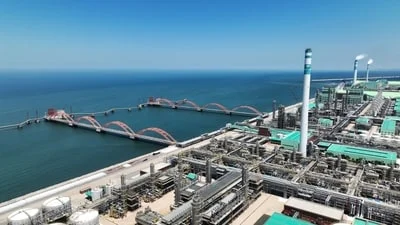
Chinese leader Xi Jinping last year summoned dozens of leaders from the nation’s top private companies to a rare meeting , calling on them to help China navigate economic difficulties.
With operations spanning petrochemicals, textiles and shipbuilding, it employs more than 300,000 people and records revenue north of $100 billion a year—more than Tesla or Boeing—according to the company’s website. Chen, Hengli’s founder and chairman, is now one of China’s richest men, with an estimated fortune of $20 billion, up from $2 billion around a decade ago, according to Forbes. His wife, Fan Hongwei, who chairs the petrochemical and refining business, has a net worth of over $5 billion. Between 2017 and last year, China’s imports of Iranian oil are estimated to have more than doubled to roughly 1.4 million barrels a day, according to Kpler, a commodity research firm.
To the outside world, Hengli—which in Chinese means “eternal strength”—may not ring a bell. It has also become a major importer of illicit Iranian crude , according to industry analysts, shipping brokers and the U.S. Practically all the country’s Iranian imports were handled by teapots, the Treasury says.
But inside China, it has become an industrial juggernaut. Hengli’s other businesses weren’t sanctioned.
Treasury, which sanctioned the company’s refinery business earlier this year, saying it bought billions of dollars’ worth of Iranian petroleum.
People familiar with the company’s operations say Hengli has been buying sanctioned oil since at least late 2020, with purchases expanding after Russia’s invasion of Ukraine in 2022. In interviews with state media, Chen described how he grew up poor in a silk-weaving town in eastern China, where he dropped out of school at 13, unable to pay the fees. Because its petrochemical business has a heavy debt load, they said, and relies heavily on Russian and Iranian crude, sometimes buying at up to a 25% discount to market prices, it turned to cheaper sanctioned crude in part.
He said he later got into silk trading, often sleeping in communal beds with other people as he traveled from town to town buying and selling fabric. Along the way, he met his wife, an accountant at a state-owned textile mill, state media said. Iran’s oil exports have been greatly reduced after the U.S. imposed naval blockades of Iranian ports, though it is unclear how long that will remain the case. Chinese state media has attributed Hengli’s accomplishments to Chen and Fan, saying they transformed a small textile factory into the country’s third-largest privately owned company through hard work and business savvy.
