
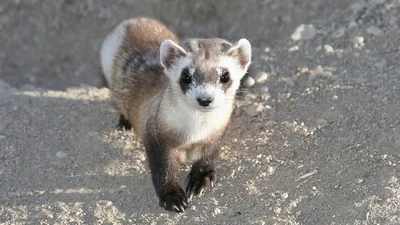
For a species once thought lost, the road back began with a very small population. The black-footed ferret, a nocturnal predator of North America’s grasslands, disappeared from much of its historic range as prairie habitat was lost. By the 1970s, it was widely believed to be extinct in the wild.
The last 18 known wild black-footed ferrets were brought into human care between 1985 and 1987 after disease devastated the remaining population in Wyoming, according to the Smithsonian’s National Zoo and Conservation Biology Institute . The species was listed as endangered in 1967 and was thought to have vanished from the wild by the 1970s. Then, in 1981, a small population was discovered near Meeteetse, Wyoming, giving conservationists an unexpected chance to intervene. Beginning in 1985, canine distemper and sylvatic plague hit the Meeteetse population. The final wild ferrets were captured by 1987. Just 18 animals, seven males and 11 females, remained in human care. The Smithsonian joined the cooperative breeding effort in 1988 and was the first institution outside Wyoming to receive offspring from the founders. Its conservation center in Virginia has since produced more than 1,000 ferret kits, including animals born through artificial insemination. In the 1980s, there were just 18 members of the species left alive, all of them kept in captivity. The progress from 18 living members of the species to thousands of releases highlights the scale of the recovery effort.
Therefore, conservation efforts include more than simply adding new animals to the population. As grasslands were converted for agriculture and prairie dogs were deliberately removed from large areas, the ferrets lost both food and shelter. They became the foundation of a conservation breeding program. Disease made the situation even worse. Wildlife managers eventually decided that leaving the remaining animals in the wild risked losing the species altogether. A study in the Journal of Heredity later found that only seven of those animals ultimately contributed genetically to the surviving population, making the recovery effort an example of conservation from an extremely narrow genetic base. The sylvatic plague is an especially serious condition. The flea-borne bacterial infection can kill prairie dogs and ferrets. With a colony of prairie dogs dying out, ferrets risk losing both their source of food and the habitat for shelter in the form of burrows. Besides that, predators, and low genetic diversity are other factors that threaten black-footed ferrets. Nevertheless, the story marks a major turn of events. Now, the offspring of those founder animals are again roaming the prairie dog towns in part of their native range. The species has not yet fully recovered and is still considered endangered.
