
A surprise attack, heavy casualties, the outbreak of war and a surge in oil prices across the world: the chain of events following the joint US-Israeli attack on Iran in February bears a striking resemblance to what happened 53 years ago.
113 attacks have been reported since the war began, according to data compiled by a Washington-based think tank. The International Maritime Organization (IMO) has listed more than 30 supertankers, also known as very large crude carriers (VLCCs), as having sustained damage during the attacks, according to a Reuters report. The stakes are particularly high, as these will be the first elections since the October 7, 2023, Hamas attack on Israel.
Seeking to exert economic pressure on the US and other countries, Iran announced the closure of the Strait of Hormuz, a critical chokepoint for global oil shipments.
“We are getting everything we want,” Trump said on Friday, October 23. The waterway lies between Iran and the Arabian Peninsula and serves as a key export route for oil from Gulf producers, including Iraq, Saudi Arabia, the UAE and Kuwait. Disruptions to shipping through the strait have persisted for months. The waterway remains effectively closed to normal commercial shipping, despite US President Donald Trump’s claims that operations are proceeding as usual. Commercial vessels have also come under attack in the strait and nearby waterways. As the conflict in West Asia continues to fuel regional instability, Israeli Prime Minister Benjamin Netanyahu is facing mounting political scrutiny ahead of the country’s parliamentary elections later this month.
Oil embargo against Israel’s supporters
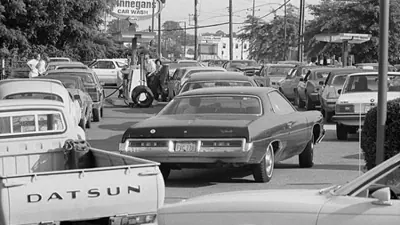
On October 17, 1973, Arab oil-producing nations announced an embargo against the US and other countries that supported Israel during the Yom Kippur War. Prices quadrupled in just four months, rising from $2.90 to $11.65 per barrel between October 1973 and January 1974, according to a paper published by Cambridge University Press.
“We are heading toward the most acute shortages of energy since World War II,” Nixon said in November 1973, according to a *Washington Post* report. The repercussions were far-reaching, affecting not only the US but also Japan, Canada, South Africa, the Netherlands and several European countries. The embargo restricted petroleum exports to targeted countries, while major cuts in oil production further tightened global supplies. Oil prices soared, forcing governments and businesses to curb fuel consumption. The fuel shortage in the US was so severe that then-President Richard Nixon ordered the National Christmas Tree to be lit with just one light and asked Congress to authorise restrictions on outdoor holiday lighting. Opposition figures have accused Netanyahu of pushing for renewed military action against Iran in a move that could invite retaliation, heighten security tensions and potentially delay the vote.
