
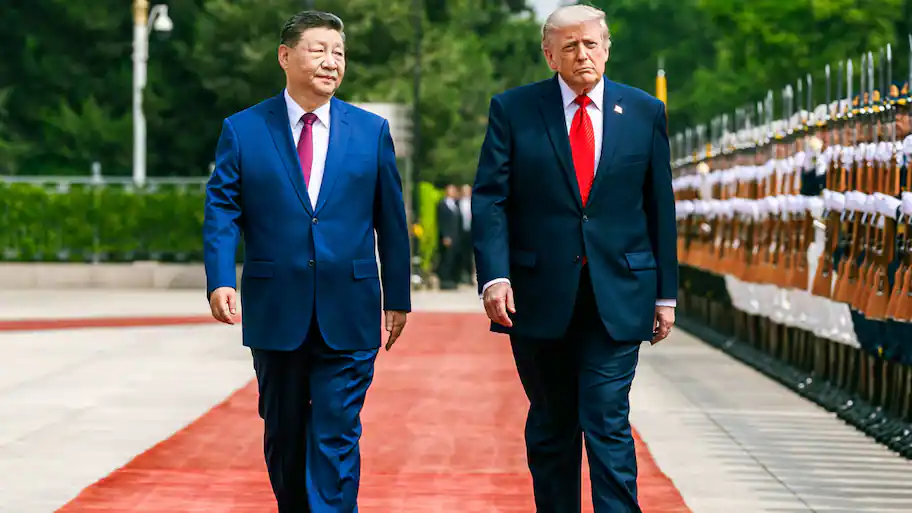
United States of America President Donald Trump has on multiple occasions framed artificial intelligence as a race the United States cannot afford to lose to China. He has remarked that AI could be bigger than the internet and warned against regulation that might leave Washington trailing Beijing.
Bessent said the two countries needed greater transparency as the world’s two leading AI powers. ‘We think that, just like with any cross-border activity, moving from opaque to more transparency between the number one and the number two AI powers in the world is very important,’ he said, according to Reuters. Yet the latest US-China talks have produced a strikingly different proposal: a mechanism for the two countries to notify each other about artificial intelligence incidents that could pose national security risks. The proposal would form part of a new US-China AI dialogue and focus on common goals and common threats. The proposed notification system would cover AI-related incidents that rise to the level of a national security concern. The Chinese response to the US proposal was not immediately clear, with China’s state news agency Xinhua only briefly acknowledging that AI had been discussed. The talks are intended to prepare the ground for a meeting between Trump and Chinese President Xi Jinping in Washington this week.
US Treasury Secretary Scott Bessent proposed the idea during talks with Chinese Vice Premier He Lifeng in New York on Sunday, according to Reuters.
The latest proposal therefore reflects two parallel US priorities: maintaining American technological leadership while establishing a channel with Beijing to manage risks arising from increasingly capable AI systems. The US-China trade truce is due to expire on November 10, while Washington says China’s supply of critical minerals has not met American expectations.
In August, he said the US was ‘way ahead’ of China in AI but warned against underestimating Beijing. ‘We’re leading in every single one, and I will tell you, the AI, the artificial intelligence, we’re way ahead of number two,’ Trump said. Trump also said AI could be more consequential than the internet. ‘We want to regulate, but we want to have it regulated where they can continue to lead, not regulation that’s going to stifle a very important industry, I think maybe bigger than the internet, bigger than anything anyone’s seen,’ he said. US Trade Representative Jamieson Greer said export controls on sophisticated AI chips and semiconductor manufacturing equipment were not part of the discussions on the proposed AI mechanism. Bessent has previously said the US and China, as the world’s two leading AI powers, have a responsibility to establish safeguards around rapidly advancing technology. George Chen, a partner and chair of Digital Practice at The Asia Group consultancy in Hong Kong, said the talks could eventually address issues including the weaponisation of AI, AI safety, protection of critical infrastructure and cyber-attack prevention.
Trump has made the AI competition with China a recurring theme. ‘Number two is China, and I never want to underestimate China, but right now we’re way ahead. The proposed mechanism is not being presented as an agreement to slow the AI race. Instead, the focus is on keeping communication open when AI systems or incidents raise national security concerns. He has also warned about powerful AI models falling into the hands of non-state actors. Whether such a mechanism can develop into meaningful cooperation remains uncertain. But he also pointed to the low level of trust between Washington and Beijing and China’s perception that the US is seeking to contain its AI development. The latest discussions also come amid wider disagreements over trade, technology and critical minerals. For now, the AI proposal does not change Trump’s central message: Washington intends to compete with Beijing for technological leadership. For now, the proposed AI safety mechanism offers one possible channel for cooperation even as Washington and Beijing remain locked in a wider race for technological leadership. (with agencies input)
Earlier this month, Trump put the stakes even more bluntly: ‘Whoever wins with AI is going to win, that’s how big it is’. The two leaders will meet on Thursday and Friday in Washington, and as the world watches, the question will be whether they can overcome deep trust deficits to hold meaningful discussions and reach tangible understandings on AI and other contentious issues.
