
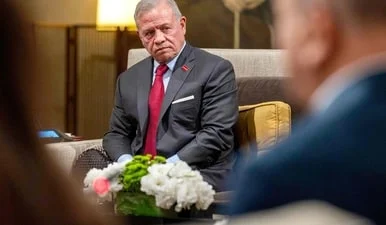
In a significant diplomatic exchange nearly two years ago, King Abdullah of Jordan expressed to Iranian Foreign Minister Abbas Araghchi his commitment to ensuring that Jordan would not serve as a battleground for regional conflicts. This statement highlights Jordan’s position on maintaining national sovereignty amid increasing regional tensions. In contrast, a decade earlier, during his presidential campaign, Abdel-Fattah al-Sisi of Egypt assured Gulf states that Egypt would be ready to defend their security, emphasizing a proactive stance in regional defense. Sisi’s declaration positioned Egypt as a key ally in the Gulf, ready to respond to threats in the region.
Political Context
The former rose by 30% from $1.8bn to $2.4bn during the first half of 2026, while the latter reached a record high in the year through June. Meanwhile, the government has raised some electricity tariffs by 12%. Egypt did deploy a squadron of Rafale fighter jets to the UAE—although it only announced this in May, exactly a month after an initial ceasefire between America and Iran took effect. It was noticeably absent on August 7th, when Saudi Arabia signed a mutual-defence pact with Pakistan and Turkey, although Saudi officials suggest it could join later.
Even as the Islamic Revolutionary Guard Corps (IRGC) fires missiles and drones at the kingdom, it writes messages claiming it has “no hostility” towards the Jordanian people and that America, not Iran, has “violated your territorial integrity”. In March Anwar Gargash, the diplomatic adviser to the president of the United Arab Emirates (UAE), complained about “major” Arab countries sitting idle as Iran attacked the Gulf. “Where are you today in a time of hardship?” he asked.
Iran has tried to exacerbate a schism between the government and the public. Such appeals may find little purchase: many Jordanians view Iran as a threat. Still, the war is a dilemma for a government already struggling with domestic discontent. At first glance Egypt’s other big sources of hard currency, revenue from the Suez canal and remittances, look solid as well. Both could be lagging indicators, however. Iran-backed attacks on shipping in the Red Sea could dent canal revenue. As for remittances, a lot comes from Egyptians in the Gulf. A prolonged slump in that region would mean fewer workers to send money. Officials in Cairo argue that Gulf states are receiving help from other allies, and that Egypt has other threats on its borders. Still, its inaction has irked its friends. Yet staying out of the war has not bought it protection. Its costs for energy imports from the Gulf have surged, too. Last month a drone struck a natural-gas facility in Damietta, on Egypt’s Mediterranean coast.
