
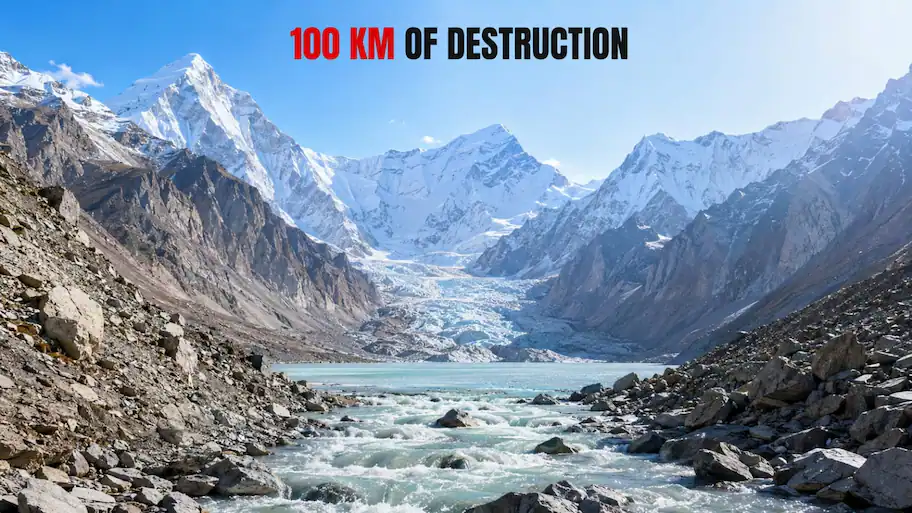
A tragic flash flood in the Nepal-Tibet border area claimed at least 400 lives, while more than 1,400 people were reported missing due to the massive breach of the mountain and glacier, which caused a wall of debris and water to move downhill. Contrary to ordinary glacier overflow, geologists have revealed that a giant piece of a mountain and glacier collapsed, temporarily blocking the flow of the river before bursting downstream.
This multiple natural disaster affected an area within a radius of 100 kilometers, destroying roads, bridges, and populated areas in its path. The high-altitude trigger : A giant piece of mountain rock and glacier fell from 5,100 meters high altitude, crashing down to the 3,000-meter level. Fast glacier loss : According to UN figures, Nepal lost almost one-third of the glaciers over the last 30 years. Fast glacier melt : The activity of melting increased by almost 65 percent in 2011-2020 compared to 2001-2010 for the Hindu Kush Himalaya region.
Weak rock structures : Due to permafrost and internal ice melting, the structural integrity of the mountains becomes weaker and makes landslides more likely to occur. High-risk persistence : Geologists warn that further occurrence of landslides or secondary outburst floods is quite possible due to unstable terrain in case of heavy rains.
The situation remains dangerous as the ice and water accumulation around the site of the disaster is creating new risks for the local population, according to disaster management services. New geological findings suggest that this disaster took place much higher than the valley level when the structural integrity of rock faces located in high altitude was compromised. The temporary dam : Millions of tons of ice, rocks, and mud fell right into the river, blocking the water stream and creating a temporary barrier. The flash breach : Once the water pressure reached critical levels behind the debris dam, it collapsed, causing a rapid movement of mud, boulders, and water. the researchers stress that climate change increases the instability of the Himalayas Although it is complicated to relate a particular landslide to overall climate conditions. Monitoring required : The regional authorities are increasing their sensor network to monitor high altitude glaciers to prevent future catastrophes.
