
After President Trump signed a memorandum of understanding with Iran in mid-June, administration officials fanned out to build support for an agreement they hoped would reopen the Strait of Hormuz and start winding down the war.
Iran’s Military Strategy Intensifies Amid Regional Tensions
Iran is enhancing its military strategy by increasing the influence of the Islamic Revolutionary Guard Corps (IRGC) over the country’s regular army. This shift includes the appointment of experienced veterans from the Iran-Iraq War and previous internal crackdowns to significant military positions.
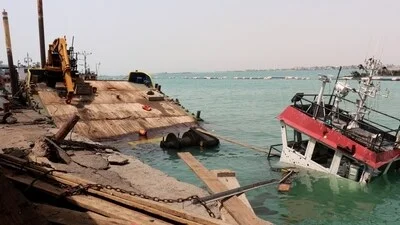
Additionally, Iran is expanding its domestic counterintelligence operations and escalating the production of missiles and drones. Recent actions by the Iranian leadership have involved aggressive maneuvers, such as attacking ships to consolidate control over the Strait of Hormuz. Furthermore, they are extending their military operations into the Red Sea, a strategic move that enables Iran to counter Saudi Arabia’s efforts to navigate around its dominance in the Persian Gulf.
“There is also a widespread view in Iran that the main war has not yet begun,” said Mohammad Hassan Sangtarash, a Tehran-based defense analyst close to the Iranian government. For the regime, “the baseline is war,” said Alan Eyre, a former senior U.S. diplomat and nuclear negotiator with Iran. “The very dangerous people from Iran, they’re sick,” said Trump, who also called Iran’s leaders scum. The Revolutionary Guard used the calm created by the memorandum of understanding to lay the groundwork with allied militias around the region to step up attacks if needed, sending advisers to Iraq, Yemen and Lebanon to discuss the plans, the officials familiar with recent Arab intelligence findings said.
“What we have seen so far is increasingly interpreted through the lens of ‘salami-slicing’ tactics—limited, incremental escalation designed to weaken capabilities before a larger confrontation. Iran’s proclamations include plenty of bravado. The country’s military and economic base have been battered by U.S. and Israeli airstrikes. More pragmatic members of the leadership including Iranian President Masoud Pezeshkian have repeatedly warned Iran needs to negotiate a deal to end the war that brings sanctions relief or face the collapse of its economy. “Iran will remain on a wartime footing, preparing for a subsequent attack. “There’s something wrong with them. In fact Iran was pursuing a two-track policy. Iranian leader Mojtaba Khamenei was taking steps to prepare the security apparatus for an expanded confrontation that may be initiated by Tehran itself While his diplomats pursued a peace deal with the U.S..
