
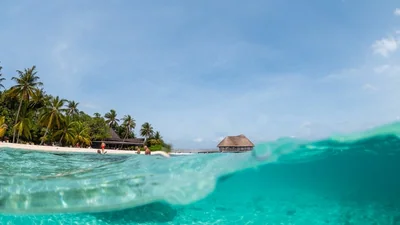
MALÉ, Maldives—The white sand beaches, turquoise waters and secluded luxury resorts of this South Asian archipelago attract millions of tourists each year. But a new trade has quietly emerged behind the postcard-perfect backdrop: a web of companies helping Russia evade sanctions.
The amount of goods flowing through the Maldives is relatively small when compared with Russia’s biggest channels for sanctions evasion , including China, Turkey and the United Arab Emirates, which together account for about $15 billion in restricted Russian imports annually. Customs data from the Maldives shows a paltry amount of exports to Russia between 2022 and 2025—about $2,300 of tuna and $25 in leaflets and brochures. But Russian trade data collected by Import Genius, a U.S.-based research firm, shows that Russian imports from the Maldives, a country with virtually no industry, surged to more than $630 million in 2022—the year the full-scale invasion began—up from less than $7 million in 2021.
But the flow of goods through the Maldives, which hasn’t previously been reported, shows how expansive Russia’s efforts to thwart Western restrictions are, turning even small and unexpected corners of the globe into channels for goods.
Cargo is never categorized as imports and only goes through minimal customs checks before being shifted between aircrafts, officials said. The new bill doesn’t list the name of the company that sold the goods, according to the documents and Western officials. When contacted, a man who was listed as the managing director or a board member for all of the companies said he couldn’t talk and hung up.
The Maldivian government and the Maldives Airports Company, which operates the airport, didn’t respond to requests for comment. The Maldives archipelago consists of more than a thousand islands, many of which are home to a single hotel. More than two million tourists travel to the islands each year—drawn by the clear waters where they can observe marine life like turtles, manta rays and whale sharks. Malé, on the other hand, feels like a different world. One of the most densely populated cities on the planet, the capital teems with a relentless tide of scooters and motorbikes in its narrow streets. Documents reviewed by the Journal show that when a cargo initially lands, the name of the company exporting the goods appears on the air waybill, along with the supposed buyer. Once in the Maldives, however, a web of obscure local companies, such as Freight Care and Go Investment, help alter shipping documents and move the goods over the tarmac, making sure they never leave the airport and avoid formal entry into the archipelago. A new air waybill is issued for the flight between Malé and Moscow’s Sheremetyevo International Airport. An address listed for Go Investment in the documents led to a small shop selling electronics. The same address was registered to multiple other companies in the business registry for the Maldives. He didn’t respond to further messages.


The Maldives Airports Company made a record profit in 2024, becoming the most profitable state-owned company in the country. Now, the government is making money off a surge in trade, in addition to taxes on the tourism sector. The company charges handling and commercial fees for cargo and resells fuel at a profit.
