
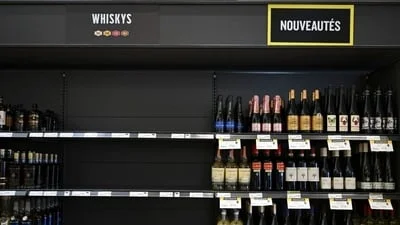
TORONTO—California Merlots, Kentucky bourbons and Tennessee whiskeys are collecting dust in Canada as alcohol becomes a high-profile hostage of trade tensions with the U.S.
Canadian officials are racing to hammer out an interim deal to stave off the new tariffs, which would hit about $20 billion of Canadian goods, about 5% of the country’s U.S.-bound exports. A poll this month from Abacus Data found that nearly 70% of Canadians support keeping the bans in place.
Prime Minister Mark Carney has said that the bans should be lifted only as part of a broader, bilateral deal with the U.S. They’ve proposed making concessions, including pushing the provincial premiers to return U.S. booze to shelves, if the new levies are dropped and existing levies on goods such as steel and autos are eased. Support for the booze bans is high in Canada, where polls show people favor taking a more hardline approach in trade talks with the U.S. over rushing into a deal. Canada’s premiers argue that the bans give Canada rare leverage and they’ve backed them stridently in the face of Trump’s tariff threats. As negotiators rush to secure a deal ahead of the deadline for the new tariffs, whether Canada’s federal government can convince the provinces to put American booze back on the shelves is likely to hinge on the fine print of an agreement. If, for instance, auto tariffs aren’t eased significantly, Ontario Premier Doug Ford, whose economy relies heavily on the industry, is unlikely to budge. A deal without relief for the lumber sector could make it difficult for the premiers of British Columbia, New Brunswick and Quebec to lift their bans.
Significant Decline in U.S. Spirits and Wine Exports to Canada
According to the Distilled Spirits Council of the United States, U.S. exports of distilled spirits to Canada experienced a dramatic decline of 70% year-over-year, totaling $60 million from March to December 2025. This period coincided with the implementation of sales bans in many Canadian provinces. In comparison, exports during the same months in 2024 reached $203 million. Furthermore, the U.S. Department of Agriculture reported that wine exports to Canada, the largest market for U.S. wine, decreased by 77%, falling to $103 million in 2025 from $460 million in 2024.
