
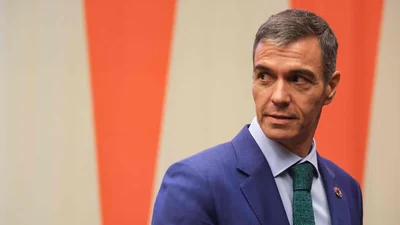
Spanish Prime Minister Pedro Sanchez called an early election for November 29 on Monday, in a bid to strengthen his mandate after a fragmented parliament rejected the government’s key housing decrees last week amid widespread protests.
“We need to renew people’s support,” Sanchez said in a televised address. “I also know that part of that social majority is dissatisfied today,” he said, but vowed to fight for Spain to remain “a bastion of openness, social justice and environmental responsibility”. The main opposition People’s Party (PP) wrote “AT LAST” in a post on X, with its leader, Alberto Nunez Feijoo, set to hold a news conference later on Monday. Sanchez’s housing measures provided a rare chance for the Socialist leader to pitch himself as the leader of a mobilised left and distract from the more politically damaging issues of the migrant crisis in Ceuta and corruption scandals, said Lorenzo Bernaldo de Quiros, economist and president of consultancy Freemarket Corporate Intelligence.
“We need to mobilise and win a much larger progressive majority in parliament, one that will allow us to overcome vested interests, deliver new social advances and continue transforming Spain . The premier acknowledged having made mistakes and falling short of campaign promises. Spain’s blue-chip index was flat after the announcement, while Spanish government bonds were broadly steady. The conservatives have been calling on Sanchez to dissolve parliament and call early elections for most of the current legislature. Polls suggest a coalition led by PP with the support of Vox is the most likely outcome in Spain, ushering a far-right party into central government for the first time since the return of democracy after the death of dictator Francisco Franco. Still, despite never winning enough votes to form a majority government, Sanchez has cobbled together a series of fragile and seemingly impossible coalitions including voices from the far-left to the separatist right to remain in power for three successive terms lasting eight years.
