
It takes 28 seconds.
“GOOD AFTERNOON, dear voters,” says Alexey Chernov, a portly 44-year-old in a plaid flannel shirt. “That’s all?” asks the host in the television studio, reminding him that the rules allow him to speak for a minute. “No, nothing else will come,” he says.
He nervously rattles off his electoral pitch: a few sentences about supporting large families. “Perhaps something else will come to mind? The remaining seconds are filled with the ticking of a clock.
On August 17th Lev Shlosberg, one of its most popular leaders, was sentenced to 11 years in a penal colony.
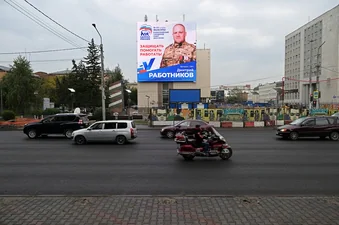
Russians are calling this year’s Duma ballot a “special electoral operation”, by analogy to the “special military operation” that is the government-mandated term for the war against Ukraine. Its candidates are being banned for displaying “extremist” symbols such as a photograph with Alexei Navalny. The Kremlin has been steadily turning Russia’s democratic institutions into simulacra since the early 2000s. It aims to discourage any dissenting voters from turning out, while coercing public-sector workers, who can be pressured into voting, to plump for Vladimir Putin’s United Russia party. But this year the exercise has reached an absurd new low. Yabloko , Russia’s oldest liberal party, was barred after its open anti-war stance led to a dramatic rise in polls. In June Maksim Kruglov, the party’s deputy chair, had been sentenced to seven years in jail. Several others have been arrested. In Chelyabinsk a candidate was disqualified for quoting Andrei Gromyko, a Soviet foreign minister: “Better ten years of negotiations than one day of war. But it is not just liberals. The FSB is removing anyone who could suddenly gain popularity, regardless of party affiliation. When Nikolai Bondarenko, a Communist candidate with 2m followers on YouTube, criticised the government’s internet restrictions in a televised debate, he was promptly detained on trumped-up charges. Those who dare to run in this election, with FSB approval, are conscious that winning can be more dangerous than losing. In Ryazan, a city 185km south-east of Moscow, none of the candidates turned up for television debates at all.
