
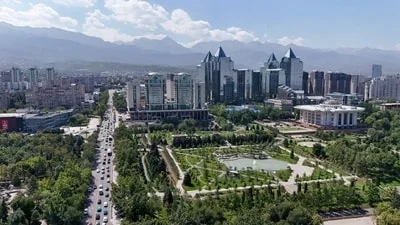
Kazakhstan is gearing up for parliamentary elections scheduled for August 23rd, with prominent billboards urging citizens to “Vote for renewal.” President Kassym-Jomart Tokayev describes this election as a pivotal moment in the establishment of a “new Kazakhstan.” This term signifies a political reset initiated in the aftermath of civil unrest, which resulted in at least 238 fatalities in 2022 due to demands for political change.
In 2022 Mr Tokayev introduced a single presidential term-limit. The end of his current (second) term in 2029 will thus become a litmus test of Mr Tokayev’s professed commitment to ridding Kazakhstan of monarchical rule.
Pluralism is thriving in Kazakhstan, so Mr Tokayev said recently—only days after Amangeldy Dzhakhin, an opposition leader, had been jailed for seven years on spurious charges of extremism. He has the right to a new “first” term, the Constitutional Court recently ruled, so he could run again—a tried-and-tested tactic to cling to power loved by Central Asian autocrats as well as by Vladimir Putin in Russia and Recep Tayyip Erdogan in Turkey. His predecessor suffered the same fate, and it is not just politicians who are targeted. Reporters and social-media personalities have also been variously imprisoned, slapped with travel bans and barred from doing journalism on flimsy-looking charges. In a blatantly political case, a satirical post poking fun at the president recently landed a YouTuber behind bars. One important reform remains in force. He has pledged to abide by this, but the constitution offers him a loophole.
