
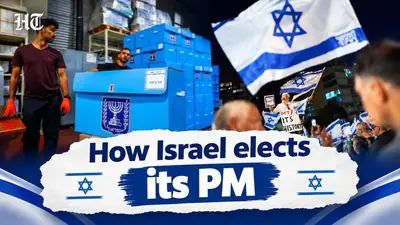
Israel is set to hold parliamentary elections on October 27 to elect a new Knesset, with Prime Minister Benjamin Netanyahu facing the prospect of losing power amid growing public discontent. The election will be the country’s first national vote since Hamas’s October 7, 2023, attack and the ensuing wars in Gaza, Lebanon and Iran.
Netanyahu, Israel’s longest-serving prime minister, is seeking to remain in office as his government faces scrutiny over the security failures surrounding the October 7 attack and other issues. A coalition commanding the support of at least 61 of the 120 lawmakers has a majority. The lawmaker given the mandate has 28 days to form a government. The president can extend this period by up to 14 days.
The elections are being viewed as a test of his political standing, with recent opinion polls suggesting that his governing coalition could lose power, according to Reuters. To form a government, a prospective prime minister must be able to secure sufficient support in the Knesset. After the election results are published, the president of Israel consults representatives of the parliamentary factions elected to the Knesset. The representatives can recommend a lawmaker to form the next government. The president then assigns the task of forming a government to a member of the Knesset considered capable of securing parliamentary confidence. this is not automatic Although the leader of the largest party is often given the mandate. The president has discretion in deciding whom to appoint, taking into account the prospects of forming a government that can win the Knesset’s confidence. During this time, the candidate negotiates with other parties to build a coalition, reaching agreements on policy priorities, ministerial appointments and the distribution of government responsibilities. Once the candidate has assembled a government, it must present its policy guidelines and composition to the Knesset and seek a vote of confidence. If the Knesset expresses confidence in the government, it takes office, and the lawmaker who formed it becomes prime minister.
However, Israelis do not directly elect their prime minister. Instead, they vote for political parties, and the country’s next leader emerges through a process of coalition negotiations and parliamentary confidence. Here’s how Israel’s electoral system works and how a new government is formed.
