
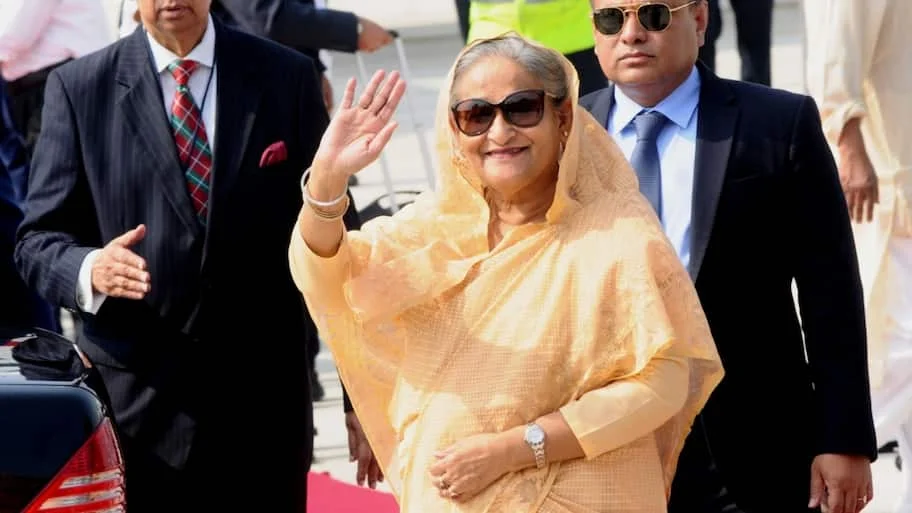
Hasina herself announced that she intends to return to Bangladesh in December, but Dhaka’s latest statement made no direct reference to her declaration. Bangladesh’s decision to link any possible visit by Prime Minister Tarique Rahman to India with its demand for the extradition of former Prime Minister Sheikh Hasina has come at an interesting juncture.
“The departure now is that Bangladesh says it will no longer lean excessively on one particular partner for political or domestic reasons. Instead, it will work with everyone according to its own needs and interests,” he wrote. Instead, Bangladesh’s Ministry of Foreign Affairs (MOFA) condemned the online press conference in which Hasina made the announcement, while focusing on its demand for her extradition from India. The timing is significant. A day before MOFA ruled out Rahman’s visit to India, M. Humayun Kabir, a former Bangladesh ambassador to the United States and now president of the Bangladesh Enterprise Institute, argued in The Daily Star that ties with India needed a fresh assessment.
Because of its opposition to the country’s independence in 1971, jamaat, one of Bangladesh’s major Islamist political parties, has a controversial history.
A media report on Tuesday described the government as “Strong on optics, less so on delivery”, citing concerns over law and order, energy supplies and the government’s ability to deliver on its promises. That position comes as the Bangladesh Nationalist Party (BNP)-led government completes six months in office and faces growing criticism over its performance. Analysts quoted in the report also suggested that some of Prime Minister Tarique Rahman’s efforts to project a people-centric government were being undermined by the conduct of some of his party colleagues. The party was banned under Hasina’s government, but the ban was lifted during the tenure of the Muhammad Yunus-led interim government. It is now the principal Opposition force in Parliament. Jamaat has also been pressing the government to implement the July Charter, which continues to face legal and constitutional challenges.
The government is also facing pressure from the opposition alliance led by Bangladesh Jamaat-e-Islami, which has criticised Dhaka’s growing outreach to Pakistan, even if it comes at the expense of relations with India.
