
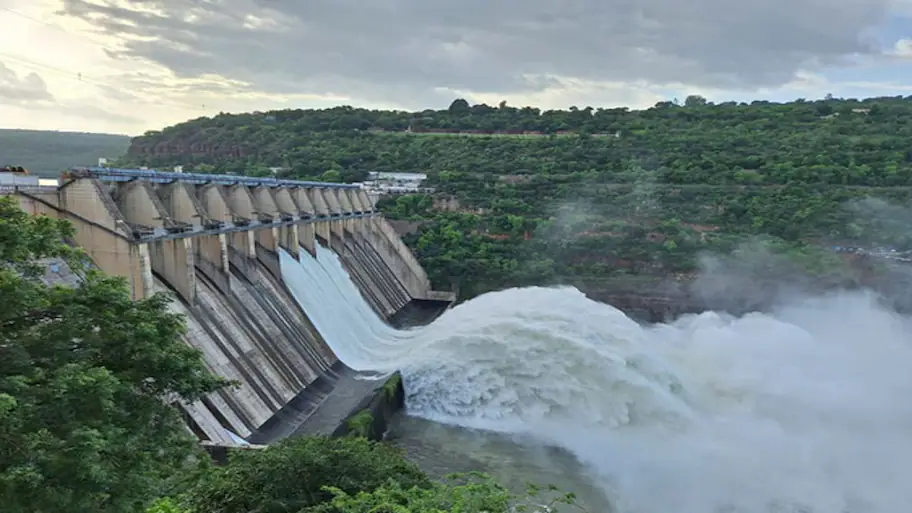
New Delhi: The Nepal disaster has exposed the risks of extensive construction in one of the world’s most fragile mountain regions. Glaciers are shrinking, slopes are prone to landslides and rivers can swell without warning, while hydropower plants, tunnels, roads and other large projects are being built across the Himalayas.
A 2022 study in Nature Geoscience found that rising temperatures are causing glaciers to retreat and permafrost to thaw across High Mountain Asia. A 2022 study of a flood that travelled from Tibet into Nepal found that the event damaged the Upper Bhotekoshi hydropower plant and other infrastructure. A 2026 study on the Asian Water Tower region found more than 1,100 hydropower projects are changing water and energy systems across the Hindu Kush Himalaya, Tibetan Plateau and surrounding areas. A 2022 study estimated the hydropower potential of the Nepalese Himalaya at around 50,000 MW and examined how climate change could affect future generation. India later announced plans for a 10 GW project on the Siang river, a major tributary of the Yarlung Tsangpo.
Another 2022 study found that the Tibetan Plateau has experienced a major decline in terrestrial water storage, partly due to glacier retreat and the increase in lake areas.
Researchers said climate change can further affect water supplies in several major Asian river basins. The researchers said project planning needs to account for a wide range of possible climate conditions rather than relying on a single expected scenario. India has said such projects are also needed to address the possible impact of China’s plans upstream.
Climate change is making conditions in the region more difficult. These changes can destabilise slopes and increase the risk from rock-ice avalanches, debris flows, landslides and glacial lake outburst floods. The study also warned that hydropower projects and reservoirs downstream can be exposed to these combined hazards. That makes the expansion of infrastructure in the region a difficult planning challenge. A dam can regulate water flow and produce electricity, but the infrastructure has to withstand the same mountains, rivers and weather events that make hydropower possible. Building a large hydropower project involves tunnels, blasting, drilling, roads and excavation. These activities can disturb slopes and drainage patterns. In a region where rocks and slopes are affected by earthquakes, heavy rainfall and melting ice, engineers have to account for several risks at the same time. Scientific research has documented cases where GLOFs have damaged hydropower infrastructure. The flood became more destructive as it picked up sediment and debris along the river. The scale of development is also increasing. The research communities are facing exposure to both climate-driven changes in water flows and the effects of dam-regulated rivers. The country has enormous hydropower potential and sees electricity generation as an important part of its economic future.
