
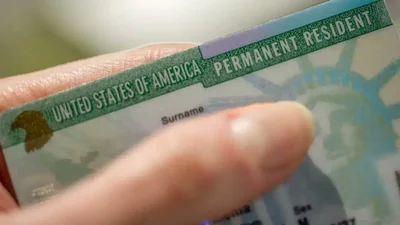
The US Department of Homeland Security has clarified documentation requirements for a new category of US-born children who may qualify for permanent residence rather than automatically receiving US citizenship at birth.
The correction applies retroactively to children born to foreign government employees on or after September 4, 2026, the effective date of the original rule. For some applicants, DHS said Form I-508, used to waive certain rights, privileges, exemptions and immunities associated with diplomatic status, may not be required.
DHS said some evidentiary language was inadvertently removed when the rule was initially codified and has now been restored . Under the revised rules, DHS says a child born in the US to a foreign government employee who is not a US citizen is not considered a US citizen at birth unless at least one parent is a US citizen. DHS said the change creates a route for eligible children to voluntarily register as lawful permanent residents.
The clarification follows an interim final rule issued in September that expanded the federal regulations covering children born in the United States to certain foreign government employees. The broader category includes foreign diplomatic officers, employees of foreign governments working in an official capacity and certain employees of international organizations with immunity. DHS also distinguishes between foreign government employees and people who may work for foreign missions or governments in other capacities. The agency’s rule states that permanent-residence registration is not mandatory, although separate federal registration requirements may apply. Instead, evidence of the parent’s foreign government employment may be sufficient for the relevant category. A Green Card gives a person lawful permanent resident status, but it does not make that person a US citizen. Permanent residents and citizens have different rights and obligations under US immigration law.
