
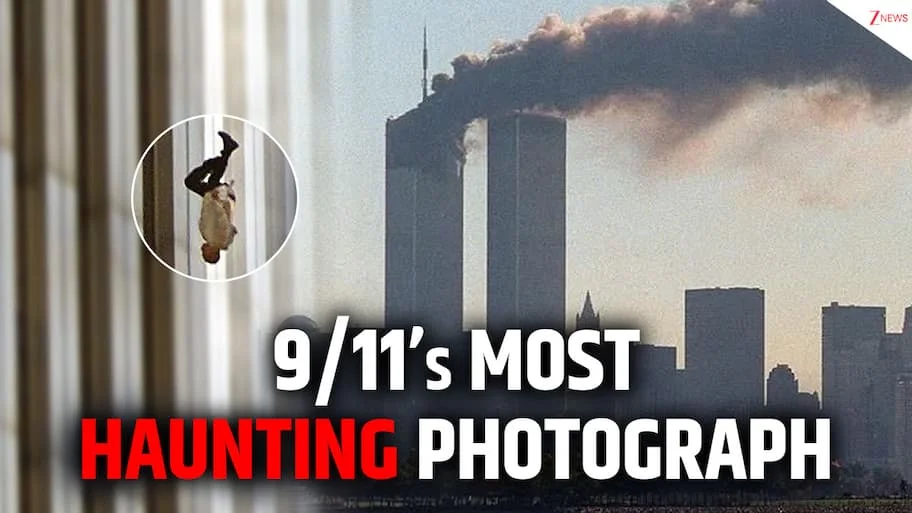
Associated Press photojournalist Richard Drew managed to capture the iconic photo known as “The Falling Man” not long after al-Qaeda terrorist attacks when two planes were hijacked and crashed into the World Trade Center skyscrapers in New York City on September 11, 2001. The picture features the image of a single person who is falling vertically from one of the Twin Towers, the North Tower, amid numerous straight-line structural elements.
Universal icon : In the end, the lack of confirmation regarding the identity of the man meant he became a universal icon representing the nearly 3,000 people who perished on September 11th. Despite the fact that the actual identity of the person was not confirmed, the photograph will remain one of the most memorable pieces of evidence of the tragic event. At first, the assignment was quite unexpected for Drew, as he was initially sent from Midtown Manhattan in order to cover the maternity fashion show when the first aircraft struck. Deployment to the event site : Following his editor’s order, Drew took the subway going downtown and came out near Chambers Street when the second aircraft struck the South Tower. Framing the image in a second : Among numerous flying debris and screaming crowds, Drew followed the people who jumped off the high floor with the help of 200mm zoom lens making a series of quick snaps. Precision through mechanical process : After analyzing the series, Drew realized that the camera had managed to capture the man while he was standing perfectly vertical in one frame of the cycle, an insight he made upon looking at his photographs again at the office of Rockefeller Center. After being syndicated in prominent American newspapers, such as The New York Times, the photograph received an immediate response from its viewers. Moral indignation : Numerous readers accused the media outlets of exploiting the private experience of passing away, causing the image to be withdrawn from publication. An undeniable truth : In comparison to photographs with various pieces of debris, this composition obliged people to think of the tragedy from the point of view of an individual. Historic image : The photo eventually evolved into a historic image of the tragic reality of the day from a controversial daily report. More than a decade later, the identity of the man in the photo is still uncertain, but many possibilities have been raised in investigative journalism. Possible victims : In early investigative stories and documentaries, the possible victims were often identified as the workers at Windows on the World, the fancy restaurant located on top of the North Tower. Family identification: Norberto Hernandez and Jonathan Briley, who both worked at the restaurant, were among the names mentioned by family members, but inconsistencies prevented positive identification.
