
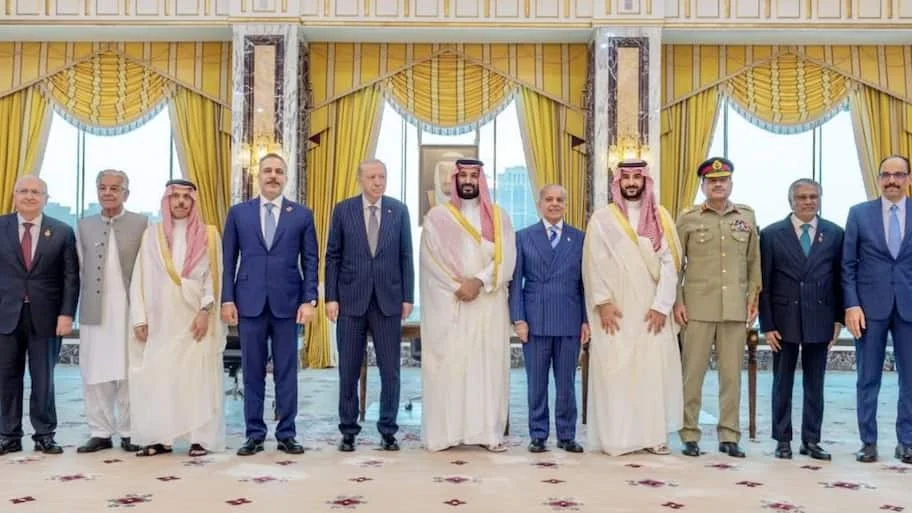
The new Mecca joint defence pact between Pakistan, Saudi Arabia and Turkey has triggered questions in India, particularly over what it could mean for Pakistan’s military capabilities and for New Delhi’s strategic interests in the region.
Key Factors
Pakistan was a member of both organisations, yet those arrangements did not automatically translate into military intervention on Pakistan’s behalf during its conflicts with India in 1965 and 1971. Pakistan’s Defence Minister Khawaja Asif, immediately after the pact was signed spoke about the need for an ‘Islamic NATO’ to counter perceived threats from India and Israel. The concern is understandable. The three countries are strategically important, have military links with the United States, and the pact includes language that ‘an attack on one would be considered an attack on the others’. But he argues that there is little reason for panic. That makes the defence relationship something New Delhi needs to monitor carefully. The same historical lesson, he argues, applies here. Words in a defence agreement do not operate in isolation from a country’s wider strategic and economic interests. “These kinds of wordings were there in the CENTO, in the SEATO and all those pacts. Pakistan’s Defence Minister Khawaja Asif has spoken about Islamic countries coming together to counter threats from India and Israel. Coming immediately after the Saudi-Pakistan-Turkey defence understanding, should such remarks raise concerns in India?
According to former Indian Ambassador to the European Union (EU) and India’s Deputy Permanent Representative to the UN Manjeev Singh Puri, India has reasons to remain alert and closely watch the developments, particularly military hardware, training and technology cooperation. History, he says, shows that defence agreements on paper do not automatically mean countries will fight each other’s wars. Puri said India should be conscious of the possibility of increased “military support, hardware support and training support” flowing to Pakistan. “There is reason to be conscious” about Pakistan’s adventurism, Puri said, but he does not believe India needs to conclude that the pact gives Pakistan a free hand. Nothing happened,” Puri said. Saudi Arabia, he said, has developed a greater sense of vulnerability following Iranian and Houthi attacks and is looking for additional security comfort despite its long-standing military relationship with the United States.
He points to the experience of earlier military groupings involving Pakistan, particularly CENTO- the Central Treaty Organization and SEATO- the Southeast Asia Treaty Organization.
