
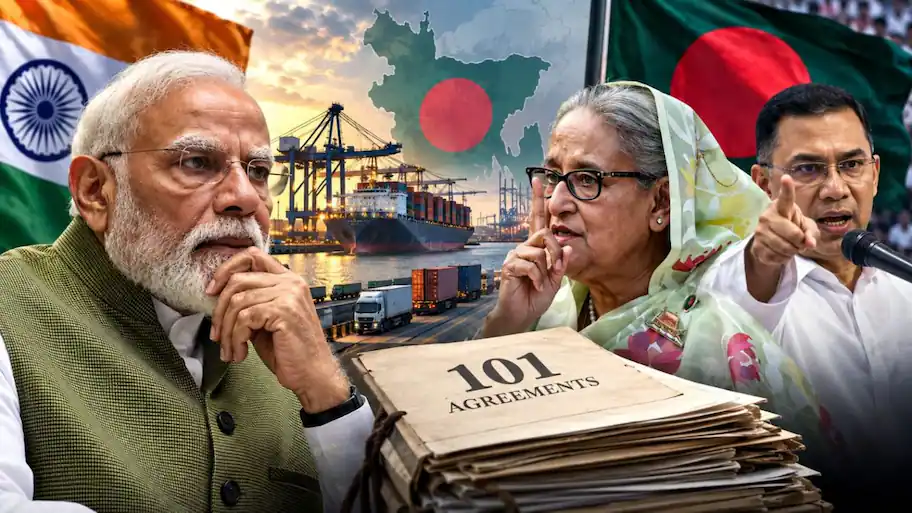
Bangladesh is examining 101 agreements and MoUs signed with India during Sheikh Hasina’s years in power.
New Delhi says Dhaka has not officially told it anything about the exercise yet. “Obviously, India will take all necessary actions to protect its interests,” MEA spokesperson Randhir Jaiswal said after confirming that India had so far only seen media reports about the review. But one sentence from the Ministry of External Affairs has put the review under a sharper spotlight. The obvious question is: Which Indian interests could be affected if Dhaka changes the terms of the Hasina-era agreements? The answer runs through Bangladesh’s ports, roads and waterways, with some of the arrangements directly connected to India’s Northeast.
For now, there is no announced Indian countermeasure. That distinction matters.
Bangladesh Chief Whip Nurul Islam Moni first disclosed that the government was reviewing 101 agreements and MoUs signed with India under the previous Awami League government. Moni said there is no plan to cancel all 101 agreements.
India’s shipping ministry said when the operating procedure was completed that the routes could reduce the distance, time and logistics cost involved in moving goods to and from the Northeast. He also alleged that arrangements under the previous government gave vessels from a friendly country preferential treatment at Chattogram Port. Instead, Bangladesh intends to examine the pacts, identify provisions it considers contrary to its interests and seek changes where required. The routes provide connections towards Tripura, Meghalaya and Assam. Indian government documents list links from Chattogram and Mongla towards Agartala via Akhaura, Dawki via Tamabil, Sutarkandi via Sheola and Srimantpur via Bibirbazar.
“You will get the outcome very soon,” Moni said while responding to questions about the arrangements, including those concerning Chattogram and Mongla ports.
