
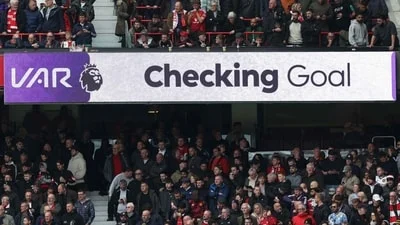
UEFA has launched a new public platform designed to clarify when the video assistant referee should intervene, as European football moves towards fewer reviews and greater authority for on-field officials from the 2026-27 season.
UEFA Aims to Refocus VAR Implementation
In a recent interview with BBC Sport, Roberto Rosetti, UEFA’s managing director of refereeing, addressed the rising dissatisfaction with the impact of Video Assistant Referee (VAR) technology on football. He acknowledged that many stakeholders are frustrated with how VAR has evolved, stating, “We realise that everywhere now there is not any satisfaction about how VAR is impacting football.” Rosetti emphasized the need to avoid overly detailed scrutiny of plays, remarking, “The context is super important. It’s football, not PlayStation. We need to be very, very careful.”
Originally, VAR was intended to rectify significant errors and serious incidents that referees might miss during matches. However, UEFA now believes that VAR’s application has broadened to include marginal contacts and incidents that can appear dramatically different when viewed in slow motion. Rosetti clarified that the governing body’s position is that VAR should only intervene to correct “clear and obvious errors or serious missed incidents in match-changing situations.”
To realign VAR with its original purpose, Rosetti stated that referees should be empowered to make decisive calls on the field, with VAR limited to instances where there is clear evidence to support a review. He noted that some recent on-field reviews had been “not connected with football.”
Additionally, the new initiative, known as Clear Line, aims to standardize the interpretation of rules across European competitions and domestic leagues. Handball decisions have been particularly inconsistent, with similar incidents yielding different outcomes in various leagues, including those in England, Spain, Italy, Germany, France, and UEFA tournaments. Rosetti expressed the goal of achieving greater consistency in law application, while acknowledging that complete uniformity in subjective decisions is unattainable.
