
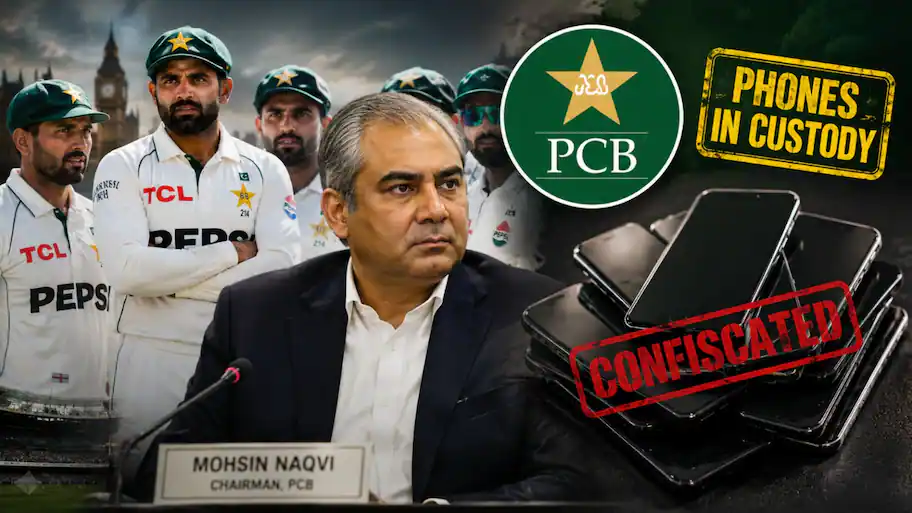
The development was reported by Pakistani journalist Amber Ali of 365 News. The players affected by the reported move have not been identified.
The PCB has taken possession of the devices and plans to keep them until the final Test of the series is completed, according to the report.
Pakistan’s chaotic England tour has been hit by another controversy, with a report claiming that the Pakistan Cricket Board has collected mobile phones from members of the national team before the third Test at Edgbaston.
The changes came after Pakistan went 2-0 down in the three Test series. Seven players were released before the Edgbaston Test, while the coaching set-up was also reshaped. Mohammad Rizwan, Imam-ul-Haq, Salman Ali Agha, Ali Usman, Aamir Jamal, Muhammad Awais Zafar and Khurram Shahzad were among those released from the squad.
The latest report arrives after Pakistan made drastic changes to its squad following two heavy defeats against England. The PCB subsequently brought in seven replacements, with five of the additions yet to play Test cricket.
The reported development comes at a time when Pakistan’s tour has already been overshadowed by significant changes within the team and coaching staff. That does not, however, establish that the PCB’s reported decision is linked to corruption or match fixing. There is still no clear public explanation for the reported decision to take the players’ phones. There is also no confirmation that the reported action has anything to do with the ICC’s anti corruption procedures.
Mobile phones are subject to strict restrictions during international matches. Players and members of support staff cannot carry or use communication devices in designated restricted areas under the ICC’s Player and Match Officials Area regulations. That includes areas such as dressing rooms. The purpose of those restrictions is to prevent unauthorised communication and safeguard the integrity of an international fixture. However, there is a distinction between preventing players from using phones in restricted areas on match days and authorities retaining personal devices for an extended period. There is currently no public confirmation that an anti corruption investigation prompted the move, and none of the players has been publicly accused of an integrity violation. The PCB could potentially have authority under player contracts, team regulations or internal disciplinary procedures, but no such basis has been publicly cited in this case.
