
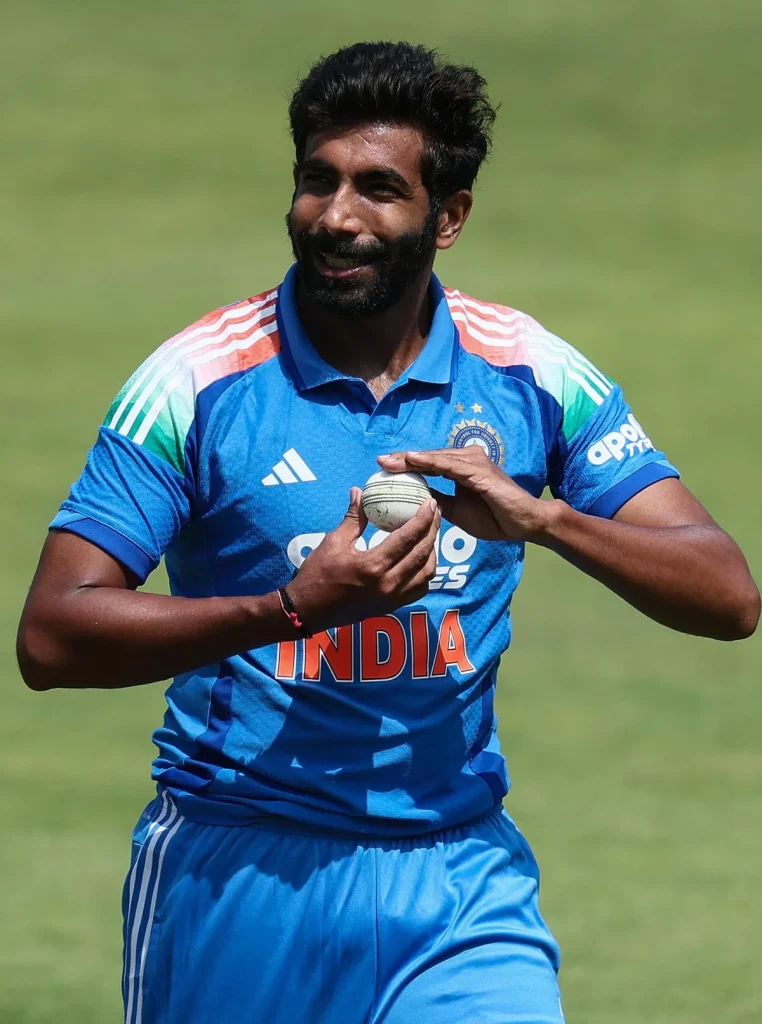
It’s only been five months since India successfully defended their T20 World Cup crown in Ahmedabad. It’s been five long months since Suryakumar Yadav’s men became the first outfit to triumph on home soil.
Result
However, post the IPL, Indian cricket has been grabbed by a sense of despair and dismay. Yet, the Irish breezed past Shreyas Iyer’s side in the first game and held their nerve to eke out a one-run victory in the next, triggering euphoria in the little nation and disbelief and shock elsewhere in the world. India had an immediate chance to make amends in England against the team that had run them perilously close in the World Cup semifinal.
The bubble emphatically burst in Ireland towards the end of June when, against all odds and in an upset of gargantuan proportions, the home side stunned India 2-0 in a Twenty20 International series. But with Harry Brook firing on all cylinders and his colleagues taking their cue from the skipper, England stormed to a 4-0 victory (the first match was washed out) to ensure there was no joy on the snappy tour of the United Kingdom for the new leadership group of Shreyas and head coach Gautam Gambhir. Because of a poor run of scores that couldn’t make up for his wonderful leadership abilities at the World Cup, india were at full strength, under a new captain with Suryakumar having been given the heave-ho.
Emergence of Vaibhav Sooryavanshi Amid IPL Excitement
In a stunning turn of events, the cricketing world has shifted its focus from the recent World Cup triumphs to the remarkable performances of 15-year-old Vaibhav Sooryavanshi. The young talent has captivated audiences with a series of impressive innings, quickly establishing himself as a rising star in international cricket. This surge in attention comes just weeks after the World Cup, where teams showcased extraordinary batting skills, with both semifinals and the final featuring scores exceeding 250 runs. As the IPL season takes center stage, Sooryavanshi’s exploits have overshadowed the previous tournament’s achievements, marking a significant moment in the sport’s timeline.
Player and Team Performance
The only salve came in the form of a 3-0 sweep in Zimbabwe when V.V.S. Laxman isn’t coaching-averse – he wasn’t in 2024 either – but perhaps having to spend so much time away from home didn’t appeal to him. How the players, already feeling the pinch after being pushed to a corner, adapt to this new normal, however temporary it might be, will determine how well they acquit themselves in a land where India are unbeaten in a Test series since 2010. India’s last Test series in Sri Lanka was in 2017, and the team composition has undergone vast changes in the last decade.
Meanwhile, Sri Lanka also announced a strong SLC XI that contained some frontrunners to make it to the Test squad. After Ireland, nothing was a formality anymore and therefore those who might point out that there was nothing flash about the ‘expected’ outcome might want to think again. Because of the mixed messaging from the regular think-tank, which will be without two established names when the tour of Sri Lanka kicks off on Friday with a three-day First Class fixture, in strict confidence, some of the more established players have hinted at a feeling of insecurity.
Laxman stood in as head coach. India were back to their dominant selves, almost, in the three fixtures at the Harare Sports Club to briefly dispel the pall of gloom. But as they embark on their latest challenge in the World Test Championship, the picture of a ship in trouble, with the crew disjointed and pulling in different directions when the need of the hour is to stay on the same page and resuscitate a challenge now floundering desperately, is discouraging, at the very least. The list of injuries has mounted alarmingly in the last few weeks. Among those selected was Jasprit Bumrah, the pace king who is the best bowler in the world, his tribulations in the IPL notwithstanding, and who can take the pitch and the conditions out of the equation anywhere in the universe. Subject to the caveat that he needed to clear a fitness test at the Centre of Excellence in Bengaluru, a caveat that also accompanied left-handed batter Sai Sudharsan’s selection. Injury management has become a massive bone of contention, with a convenient accusatory finger pointed at the CoE, a soft target when the actual ‘culprits’, for want of a better word, are more firmly entrenched within the contours of the national side and whose task it is to monitor the fitness and recovery from injury of those who are playing international cricket on a reasonably regular basis. All of a sudden, CoE boss Laxman’s name has cropped up as a potential successor to Agarkar, just as it had more than two years back when it was taken for granted that he would take over as the head coach of the national side from his friend Dravid. In a stand-in capacity, first for Dravid and more recently for Gambhir, he has done a stellar job. In so many ways, Laxman is a bit like Ravi Shastri, a man for a crisis. Laxman’s reputation as a crisis man was firmly established during his playing days when he bailed the team out of a spot more than once, several of them with the bowlers – he has never liked the word ‘tailenders’ – for company. Whether Agarkar is actually contemplating stepping down and, in that eventuality, whether Laxman is the preferred and willing choice, remains to be seen. But it is clearly this artificial uncertainty that Indian cricket could do without as it approaches a crucial phase in the five-day game with nine Tests lined up in the next seven months, four of them away in Sri Lanka and New Zealand. India contributed to their misery in England, especially, choosing not to respect the conditions or the quality of the opposition bowling – Jofra Archer on tracks that have a bit in them is a far different proposition from Archer of Rajasthan Royals plying his wares on batting beauties in the IPL. Instead of embracing equanimity, there is, those in the team insist, a shrill insistence on outcomes, which can never be a positive development. Assistant coach Ryan ten Doeschate, who came on board nearly two years back when Gambhir took over from Dravid, and fielding coach T. Dileep, who has been with the national squad for a lot longer, are now surplus to requirement. In fact, only Rahul, Kuldeep Yadav and Ravindra Jadeja in this squad have appeared in Test matches in Sri Lanka. Led by Sonal Dinusha, who has played three Tests for SL, the squad features pacers Vishwa Fernando, Lahiru Kumara and spinners Isitha Wijesundara and Ramesh Mendis. India: Shubman Gill (Captain), KL Rahul (Vice-Captain), Yashasvi Jaiswal, Rishabh Pant (WK), Sai Sudharsan*, Dhruv Jurel (WK), Ravindra Jadeja, Kuldeep Yadav, Manav Suthar, Mohammed Siraj, Prasidh Krishna, Gurnoor Brar, Devdutt Padikkal, Saransh Jain, Auqib Nabi. SLC XI: Nishan Madushka, Ravindu Rashantha, Pasindu Sooriyabandara, Pavan Rathnayake, Ahan Wickramasinghe, Sonal Dinusha (Captain), Anjala Bandara (wk), Nipun Dananjaya, Lahiru Kumara, Vishwa Fernando, Asanka Manoj, Isitha Wijesundara, Ramesh Mendis, Kesara Nuwantha, Dilum Sudeera.
In some respects, it would seem as if the misadventures in the UK have forced a pressing of the panic button when the crying need is for calm heads and an acceptance that while the results didn’t go according to plan, it doesn’t mean the end of the world.
It was bad enough that all-rounders Washington Sundar and Nitish Kumar, as well as Harshit Rana, the pacer whom Gambhir is trying to shape into an all-rounder, were ruled out of the two-Test tour of Sri Lanka long before the selectors under Ajit Agarkar met to pick the squad.
