
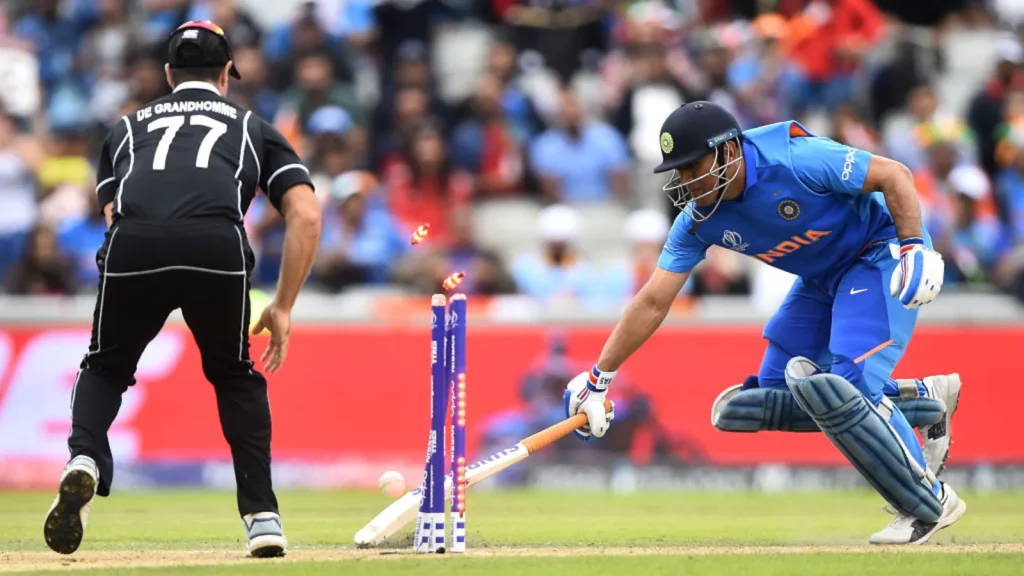
The recent rule changes announced by the International Cricket Council (ICC) sparked a degree of confusion and some criticism from fans across the world, particularly the new law for run-outs. The ICC had stated that a fielder must have complete control of the ball for a run-out or stumping. This caused question marks to be raised over incidents like non-striker run-outs, with fans speculating that such dismissals may be no longer possible as the bowler rarely gets full control of the ball in such scenarios.
On Thursday, the MCC released a statement where it said that the “complete control” aspect is only taken into consideration for dismissals where a player uses their hand to dislodge the stumps, rather than the ball. “Although this Law change has been public since February, when the Laws came into force last week a number of people appear to have misinterpreted it,” the MCC said in its statement . “There has been a suggestion that ‘for all run outs, the fielder has to have complete control of the ball’, which has led to questions about bowlers deflecting the ball onto the stumps, or it bouncing off a wicket-keeper’s pads, or being kicked onto the stumps – and there’s been some disquiet about a new Law saying you need complete control for any Run out,” the statement further read. “Fortunately, that’s not what the Law says, and that’s not what you’ll be seeing in cricket going forward in these new Laws and Playing Conditions. It is only if it’s the fielder’s person, not the ball, that makes contact with the wicket, that this new piece of Law becomes relevant,” the MCC said in its statement.
However, the Marylebone Cricket Club (MCC) has made a clarification regarding the run-out rule change. However, such instances will now require the player to have complete control of the ball, as deemed fit by the umpires. This Law applies to when a fielder is breaking the wicket with their hand or arm, while holding the ball. In that circumstance, they need to have the ball in their hand, and with complete control, to be able to break the wicket,” it added. “A fielder can, of course, still break the wicket with the ball. If the ball hits the stumps and dislodges the bails, there is no question of control – the wicket is fairly broken.
Previously, if a player had the ball in their hands, they could dislodge the stumps or bails with their hand itself, rather than actively touching the stumps with the ball.
