
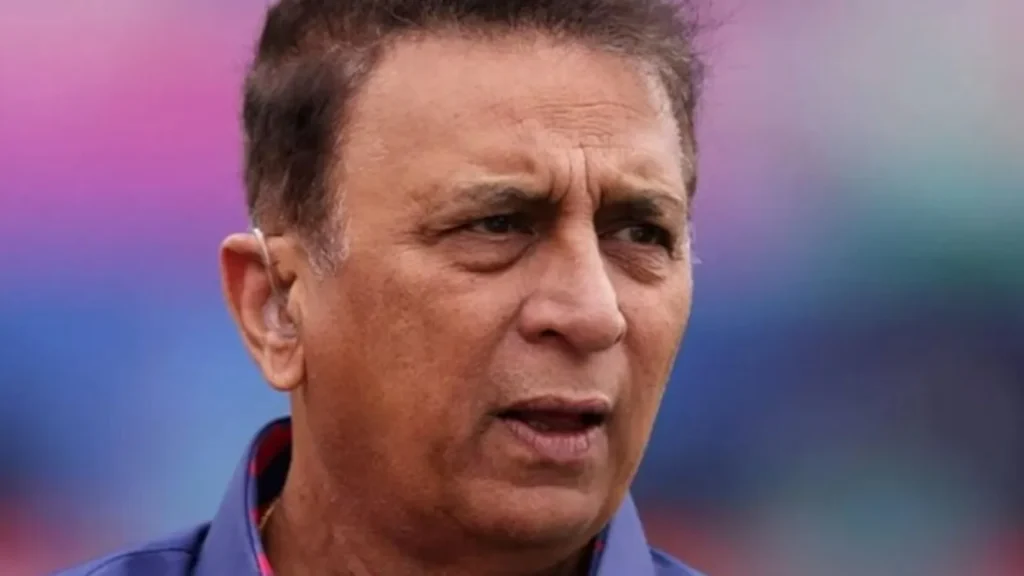
Did India get the wrong end of the toss factor in conditions where dew played a big part, or could Shreyas Iyer and Co. have done things differently in the second T20I against the West Indies after putting up a mammoth total of 249/5 in 20 overs? Cricket legend Sunil Gavaskar reckons India missed a trick by handing Kuldeep Yadav the crucial 17th over instead of turning to tearaway pacer Mayank Yadav or left-arm quick Arshdeep Singh in the high-scoring second T20I against the West Indies in Ranchi, which the hosts lost by six wickets as the visitors levelled the five-match series 1-1.
Kuldeep was taken for 24 runs in a game-changing over, conceding three sixes, a boundary and a wide as the West Indies gained the upper hand in their daunting chase of 250. “His (Mayank’s) economy rate was about 12 an over, and at that stage, the West Indies needed more than that. We’ve seen this in the IPL as well, with 260 being chased in 19 overs. In this game too, 250 got chased down easily in 18.3 overs,” Chahal said.
Of the wickets that had fallen, he had taken three,” Gavaskar told JioStar. When the batters were still trying to get their eye in, maybe Kuldeep coming in would have been a better idea,” Gavaskar said, pointing out another possible bowling change that could be criticised. “Definitely! I would have gone with either Arshdeep or Mayank (in the 17th over). Yes, Arshdeep went for plenty in his final over (18th over), but Mayank had struck the early blows. So, if he had taken a wicket, and sometimes when the game is going in your favour, who knows, you would have got a wicket even if it had not been off a great delivery,” Gavaskar added. “And once you get a wicket, suddenly, the opposition is on the back foot. A new batter has to come in. So, maybe that (bringing in Mayank) could have been tried. For me, I think giving Shivam Dube the ball in that ninth over was not exactly what was required at that stage. “On such wickets, there’s nothing for the bowlers. When the ball gets old, there’s dew, the ball comes nicely onto the bat, and the grounds are getting smaller.
The onslaught left India under pressure as the visitors closed in on the target on Friday.
Earlier, when the Impact Player rule was not there, you used to see 50 runs in six overs, and 170-180 was a fighting total,” he said. “But these days, 70-80 runs are scored in the first six overs, and the game is done there itself. Because i am a bowler too, and when I bowl in the IPL, on small grounds with flat wickets, you have an Impact Player as well, i feel for them,.
“So, what should bowlers do? What is the use of their skill? So, either you have to have something for the bowlers in the wicket, or else just install a bowling machine,” he added.
