
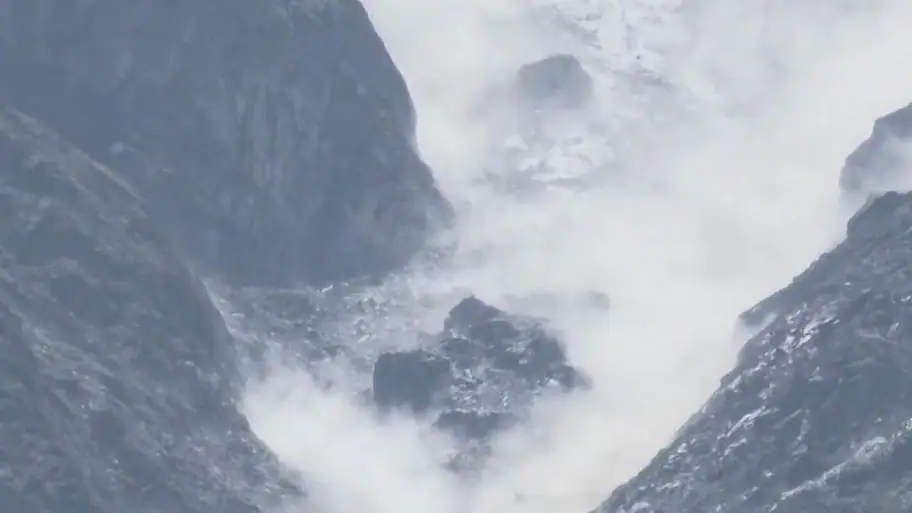
New Delhi: A new scientific study has identified 219 hanging glaciers in Uttarakhand’s Alaknanda basin, with a large amount of ice sitting in unstable conditions on steep mountain slopes. Researchers say rising temperatures in the Himalayas are increasing the chances of sudden ice break-offs from these glaciers.
The findings were published in April 2026 in the journal Natural Hazards in a research paper titled ‘Basin-scale inventory and exposure assessment of hanging glaciers, Central Himalaya’. Using the GlabTop2 model, the researchers identified 219 hanging glaciers across the Alaknanda basin. These glaciers cover a total area of 71.7 ± 3.5 square kilometres. “We have said in our study that 219 ‘hanging glaciers’ have formed in Uttarakhand.
This instability has led to the development of hanging glaciers on steep slopes, which pose significant risk of ice break-offs with severe downstream impacts,” the researchers said in the study. The study says rising temperatures are changing the condition of Himalayan glaciers. Ashim Sattar, who is aaan assistant professor at IIT Bhubaneswar, climate change is having a major impact on a large part of the Himalayan region, according to author of the study. This is one of the first inventories of hanging glaciers in Uttarakhand,” he said.
The study looks at the Garhwal Himalayas and provides a basin-level assessment of hanging glaciers in the Alaknanda basin, an area where such glaciers have not been studied in detail at this scale. “Himalayan glaciers increasingly exhibit geometric and dynamic instability under rapid warming and climate variability. Warmer conditions can increase glacier melt and affect the stability of ice and frozen ground at high elevations.
The study also adds to the increasing research on how climate change is affecting the high Himalayas. Glaciers in the region are exposed to changing temperatures, different snowfall patterns and changes in the conditions that hold ice and rock together on steep slopes.
