
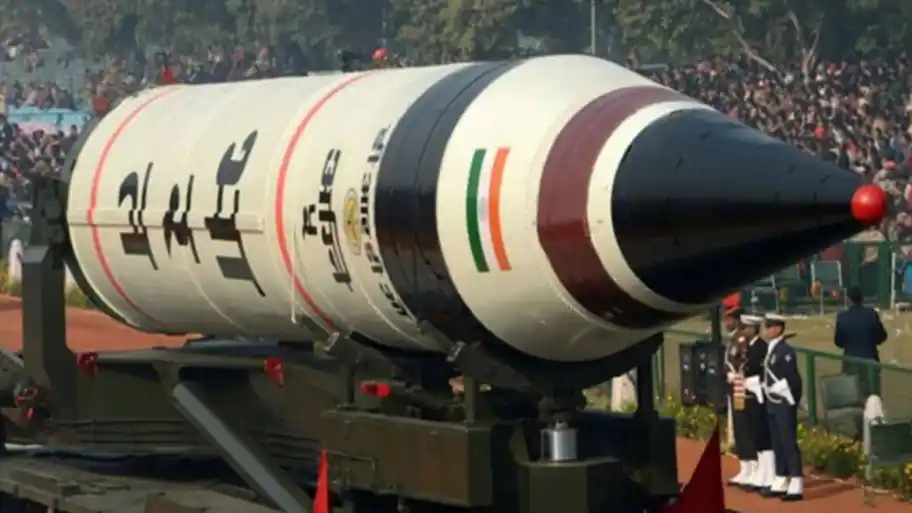
New Delhi: India is estimated to have 190 nuclear warheads, 20 more than Pakistan, and could soon move ahead of the United Kingdom in the size of its nuclear stockpile, according to a new assessment by the US-based Federation of American Scientists (FAS).
Titled ‘India’s Nuclear Weapons – 2026’, the assessment was written by Hans Kristensen, director of the FAS Nuclear Information Project.
At present, India operates nine nuclear-capable systems, according to the report. At least two more nuclear-capable systems are under development and are nearing completion, the assessment said. “We estimate that the operational forces can deliver over 160 nuclear warheads, with additional warheads having been produced for missiles in production, for a total inventory of up to 190 warheads,” the report said.
It provides an overview of India’s nuclear arsenal, delivery systems and weapons-grade plutonium production. These include two aircraft, six land-based ballistic missiles and one sea-based ballistic missile. These systems are expected to enter service with the armed forces within the next few years. The FAS expects India’s nuclear stockpile to increase further as more weapon systems under development enter military service. India’s nuclear force is also being developed across land, air and sea platforms. The sea-based component is particularly important for maintaining a retaliatory capability that can operate after a nuclear attack.
How much plutonium does India have?
India’s estimated stockpile of 190 warheads puts it ahead of Pakistan, which is estimated to have around 170. The United Kingdom has approximately 225 warheads. It means India is now within 35 warheads of Britain’s estimated stockpile. Russia has the world’s largest nuclear arsenal, with around 5,420 warheads, followed by the United States with approximately 5,042. Russia and the United States account for about 86 per cent of the world’s total nuclear warheads, according to data cited by the FAS and the Stockholm International Peace Research Institute. China has the third-largest nuclear arsenal, with an estimated 620 warheads. France has around 370 warheads and ranks fourth, followed by the United Kingdom with approximately 225. Israel is estimated to possess around 90 warheads, although it follows a policy of nuclear ambiguity. North Korea is estimated to have about 60 warheads. It estimated that the country has produced around 730 kilograms of weapon-grade plutonium, with an uncertainty range of about 170 kilograms. The estimate comes from the International Panel on Fissile Materials’ 2026 assessment. The FAS said that if around four kilograms of plutonium are assumed to be required for each nuclear warhead, India’s existing material could theoretically provide enough plutonium for between 140 and 225 warheads.
Its stockpile is increasing at the fastest rate among the nuclear-armed states, according to the assessment. The FAS assessment says India’s existing nuclear forces include aircraft-based systems, land-based ballistic missiles and a sea-based ballistic missile. The report says the development of additional delivery systems could lead to further increases in India’s warhead inventory in the coming years. The FAS assessment said this policy reduces the need for a capability aimed at launching a disabling first strike.
Outside the five permanent members of the UN Security Council, India and Pakistan have the largest nuclear arsenals in South Asia. The nine operational systems consist of two aircraft, six land-based ballistic missiles and one sea-based ballistic missile. Two additional systems are being developed and are close to completion. The FAS assessment also examined India’s stock of weapons-grade plutonium. The report clarified that this calculation does not mean all the material has been turned into weapons. It provides an estimate of the potential number of warheads that India’s plutonium stock could support. India has long maintained a nuclear no-first-use policy. It means India will not use nuclear weapons first and would use them in retaliation after a nuclear attack. A more mature and secure sea-based retaliatory capability could also reduce the need to keep land-based nuclear forces on high alert. Pakistan follows a different nuclear doctrine. Islamabad does not have a no-first-use policy and reserves the option of using nuclear weapons first. Its nuclear strategy is aimed at offsetting India’s conventional military advantage. Pakistani officials have described nuclear weapons as a strategic shield against large-scale conventional military action. Islamabad has retained the option of nuclear use if its conventional defences are overwhelmed or the country faces an existential threat. The different doctrines have influenced how neighbouring countries develop and deploy their nuclear forces, with India placing emphasis on retaliation and Pakistan keeping a first-use option as part of its military strategy.
