
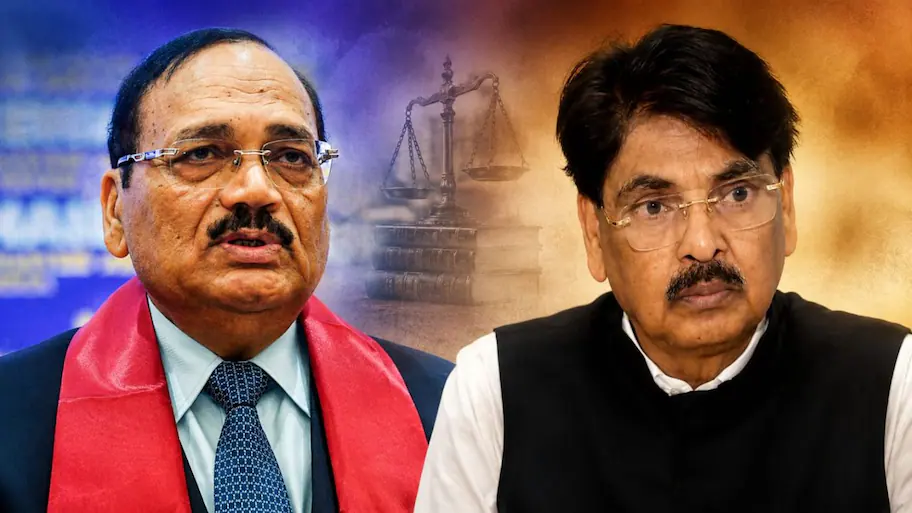
The Supreme Court on Thursday questioned the Bar Council of India’s intervention against the 2026 graduating students of NALSAR University of Law after they objected to Chief Justice of India Surya Kant being invited as the convocation’s chief guest. The Court stated that the BCI cannot discipline law students for conduct that falls under their university’s domain until they graduate and enrol as advocates under applicable law.
The Court made it clear that the BCI’s role in legal education does not give it disciplinary authority over students who are still enrolled at a university.
The controversy began after students from NALSAR’s 2026 graduating batch objected to the proposed invitation of Chief Justice of India Surya Kant as the chief guest for their convocation.
He said the issue was a dialogue between him and the students and maintained that students have the right to protest peacefully. “As far as the conduct of law students is concerned, the Bar Council of India has neither jurisdiction nor statutory competence. That falls exclusively within the domain of the educational institution or university. There cannot be any dispute about that. After a student graduates and registers himself or herself as an advocate, the Bar Council comes into the picture. It is then the statutory authority responsible for regulating advocates. But none of these students had enrolled as advocates, “Bar and Bench quoted the court as saying. The students expressed their concerns over remarks made by the CJI during a Supreme Court hearing concerning fake degrees and subsequently wrote to the university, urging it to reconsider the invitation. “Naturally, this is absolutely uncalled for. It’s a dialogue between students and me. Who are they to raise an issue? This is totally uncalled for. In my student days I have been actively involved in student activities. Assuming, even if they are wrong, they have a right to protest. BCI doesn’t have any business,” Bar and Bench quoted CJI Kant as saying.
CJI Surya Kant had earlier questioned why the BCI had intervened in the matter.
