
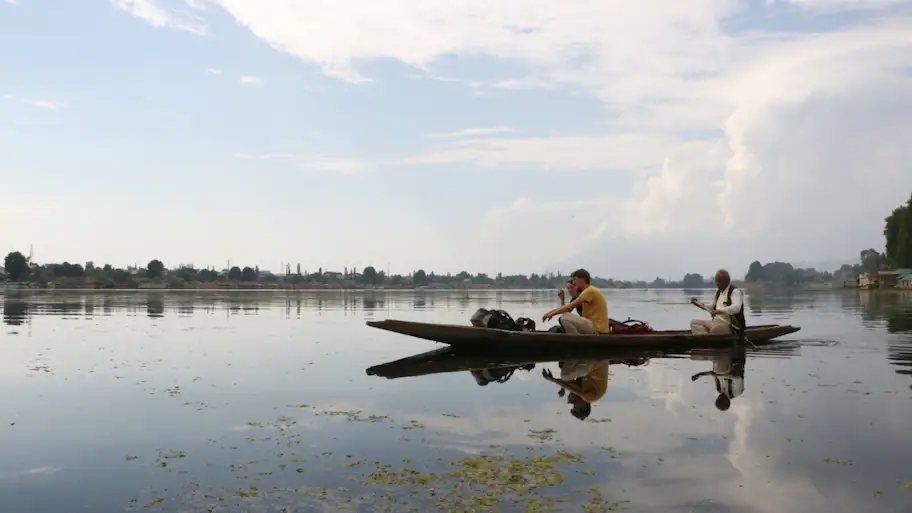
From the 1960s through the 1980s, the Kashmir Valley was not merely a scenic backdrop for Bollywood films, it was almost a character in itself. The snow-capped peaks, shimmering Dal Lake, meadows of Gulmarg and Pahalgam, and the romantic allure of shikaras provided the perfect canvas for some of Hindi cinema’s most memorable films. Movies such as Junglee, Kashmir Ki Kali, Jab Jab Phool Khile, Bobby, Kabhi Kabhie, Noorie, Silsila and Betaab turned Kashmir into cinema’s favourite paradise.
Scheduled from September 7 to 10, 2026, the festival marks the second major international gathering in the region after the G20 Tourism Working Group meeting held in Srinagar in May 2023. Bhukhari said the main event will be held at the Sher-e-Kashmir International Convention Centre on the Boulevard in Srinagar between September 7 and 10. 135 films shortlisted from across the world The scale of the debut edition is significant. Around 1,000 to 1,100 films were received from 92 countries after applications were invited, according to Bhukhari. A preview committee subsequently shortlisted around 135 films across three categories: the International category, Bharat Panorama, which invited entries from across India, and the Jammu and Kashmir Select category. “They are very acclaimed, independent people from the cinema world, and they have given 135 films. India leads with 64 films, followed by France with 13 and Iran with eight. The festival also carries a substantial prize purse of ₹96 lakh across nine categories. The Best Film award carries a prize of ₹25 lakh, while Best Director and Best Debut Film of a Director will receive ₹15 lakh each. Best Film – J&K Select carries ₹10 lakh. Best Actor (Male) and Best Actor (Female) will receive ₹8 lakh each, while Best Cinematography, Best Sound Design and Best Editing will carry prizes of ₹5 lakh each. More than just film screenings IFFJK 2026 will extend beyond the screening of films. More than 300 invited delegates from around the world are expected to attend, creating opportunities for networking, collaboration and exposure for local artists and aspiring filmmakers.
Then, due to certain circumstances, activity reduced a lot, although it is picking up again. And some activity will also take place in Gulmarg; we will take some people there for sightseeing in Gulmarg so that they come to know how many beautiful aspects the beauty of Kashmir holds,” he said. I feel that if we can pull off a good film festival this time, then moving forward in the coming years, our effort is to make this happen every year so that it gains solidity.
Now, in a powerful symbol of revival and reconnection, Jammu and Kashmir is set to host its first-ever International Film Festival of Jammu and Kashmir (IFFJK 2026), themed “Rang-e-Cinema” (Colours of Cinema). Reconnecting Kashmir with the film industry Syed Shahnawaz Bhukhari, Joint Information Officer, Jammu and Kashmir, said the festival is part of a broader effort to restore the connection between the Valley and the film industry. “Look, for quite some time, there was an overall effort from Jammu and Kashmir regarding the connection that the film industry previously had with Jammu and Kashmir, with Kashmir, as you yourself stated, that when Bollywood was at its peak here, that peak of Bollywood came when films were shot right in Kashmir,” he said. “It is an effort from the government’s side that film tourism should be promoted in Kashmir, in the regions of Jammu, and people from Bollywood should be given the confidence that work can be done here,” Bhukhari said. He said the administration hopes to turn the festival into an annual event. “It is our effort to hold this event every year, and parallel to the Cannes Film Festival, an international film festival should continue to take place in our country as well, in Jammu and Kashmir, every year,” he said. Their screenings will now take place in our INOX,” Bhukhari said. And every year, God willing, more people from all over the world will come here and take part in this film festival,” he said. Where we can bring people from the rest of the world and other states of our country especially the film industry folks in the south, in Bombay bring them here, give them confidence,” he said. For a Valley that once formed the visual heart of some of Bollywood’s most beloved films, “Rang-e-Cinema” represents more than the return of filmmaking.
Audiences across India fell in love with the Valley through stories of romance, youth and beauty, while tourism flourished alongside the film industry’s presence. That golden era, however, faded with the onset of terrorism. Cinema halls shut down, film units stopped arriving, and Kashmir’s deep connection with the silver screen was interrupted for decades. Organised by the Jammu and Kashmir government’s Department of Information and Public Relations (DIPR), in collaboration with the National Film Development Corporation (NFDC), the festival is a deliberate effort to re-establish Kashmir as a vibrant hub for cinema, creativity, cultural exchange and film tourism. “You will see that big numbers of Bollywood have been shot in Kashmir. So ultimately, a community has succeeded this year that we have been able to plan an event. Film screenings will also take place at INOX, while some activities will be organised in Gulmarg. “INOX, as you know, is one of our theatres here; screenings of films will take place in INOX. He added that the initiative is aimed at promoting film tourism across Kashmir and Jammu and giving members of the film industry confidence that productions can once again be undertaken in the region. The J&K Select category also includes a provision for local filmmakers, allowing their films to compete separately. He added that a separate jury committee will evaluate the shortlisted films across the three categories, with awards and cash prizes to be presented to the winners. The shortlisted films represent a broad international spread. Argentina and Spain have four films each, while Brazil, Germany, Russia and the United States have three films each. Other participating countries include Türkiye, Sweden, South Korea, Colombia, Taiwan, Qatar and several others, giving the festival a distinctly global character. Cinema across Srinagar, Jammu and Gulmarg The festival will spread beyond a single venue, with screenings and events planned at some of Jammu and Kashmir’s prominent locations. These include the Sher-I-Kashmir International Conference Centre (SKICC) and INOX multiplex in Srinagar, Movie Time Cinemas in Jammu and the Gulmarg Convention Centre. One of the most visually striking attractions proposed for the festival is a floating cinema on Dal Lake near SKICC, where audiences seated on shikaras will be able to watch films against the backdrop of one of Kashmir’s most iconic landscapes. The concept brings together cinema and the Valley’s natural setting, reviving the same visual association that once made Kashmir one of Bollywood’s most sought-after filming destinations. Focus on emerging filmmakers and local talent The festival will also seek to create opportunities for emerging filmmakers through its Emerging Filmmakers Contest, designed to spotlight and nurture local talent. A five-member international jury headed by acclaimed cinematographer-director Santosh Sivan will evaluate the entries. The jury includes Oscar and BAFTA-winning sound designer Resul Pookutty, German film curator Dorothee Wenner, media entrepreneur Keiko Bang and National Award-winning filmmaker Himansu Sekhar Khatua. The programme includes masterclasses, workshops, panel discussions and conversations with industry professionals. Cultural showcases will also highlight Jammu and Kashmir’s handicrafts, handloom, cuisine, music and traditional arts, bringing the region’s wider cultural identity into the festival. Can Kashmir become a global film destination again? Bhukhari described the festival as a first attempt that could grow into a major annual international event. “This is a first attempt. He believes Kashmir has the potential to develop an environment for a film industry capable of competing on an international scale. “Kashmir has the potential that, if we cannot surpass Europe, we can create an environment for a film industry here that matches the competition of Europe. Chief Minister Omar Abdullah and officials have similarly framed IFFJK as a transformative platform, not merely a film festival, but a bridge reconnecting Kashmir with its cinematic past while positioning the region as a future destination for film production, tourism and creative industries. The improved security situation and growing international confidence have made the ambitious event possible. It is an attempt to reclaim Kashmir’s place on the global cinematic map and invite the world to rediscover its landscapes, stories and creative spirit.
