
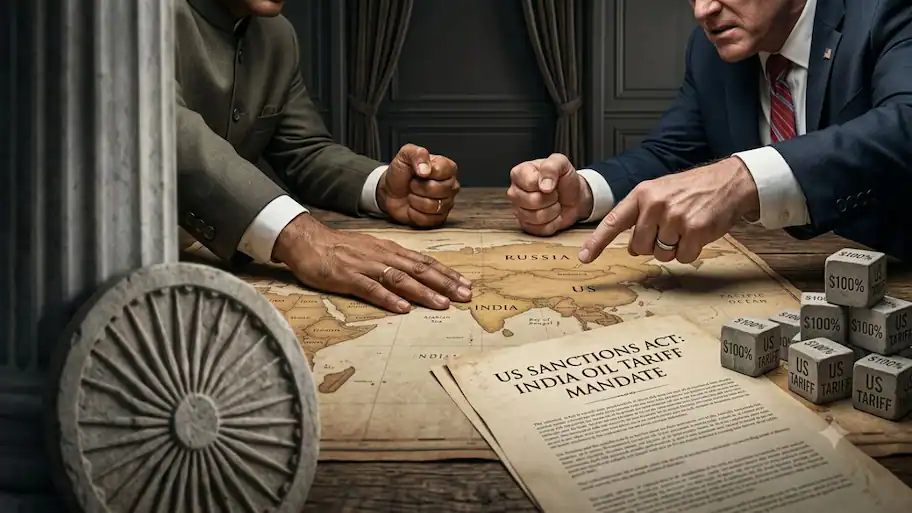
Washington: India has been specifically named in a US House amendment that could make the country eligible for tariffs of up to 100 per cent over purchases of Russian oil and gas. Graham Sanctioning Russia and Iran Act of 2026, which is moving through the House of Representatives. The provision is part of the Lindsey O.
Why the India provision is important
The House on Tuesday (September 15) advanced the legislation in a 214-211 procedural vote and cleared the way for a final vote. The bill is expected to come up for that vote before the House begins its early recess ahead of the November 3 midterm elections. An amendment introduced by Democratic Congressman Steny Hoyer proposes a specific list of countries that would be eligible for duties of up to 100 per cent under the bill’s secondary tariff provision. The amendment does not impose a 100 per cent tariff on New Delhi. The House Rules Committee’s official record lists the amendment as proposing that these countries be described as eligible for duties of up to 100 per cent for purchasing Russian-origin crude oil or natural gas or facilitating sanctions evasion. The House Rules Committee considered several amendments on Monday (September 14). Earlier reporting noted: India Faces 100% Tariff Risk As Russia Sanctions Bill Advances In US India Faces 100% Tariff Risk As Russia Sanctions Bill Advances In US India Faces 100% Tariff Risk As Russia Sanctions Bill Advances In US Earlier reporting noted: The Lindsey O Graham Sanctioning Russia and Iran Act of 2026 cleared a procedural hurdle in the House of Representatives on Tuesday evening after two Democratic lawmakers broke ranks with the party and voted in favour with the Republicans. Earlier reporting noted: The resolution to advance the Russia sanctions bill and a slew of other legislations was approved by a 214-211 vote, shocking the House Democratic leadership.
It would identify India as one of the countries eligible for such duties if the legislation becomes law and the US president uses the authority provided by it. The committee rejected a proposal from Congressman Gregory Meeks and other Democrats that sought to remove the section granting broad secondary tariff powers. The Hoyer amendment naming the countries was also not made in order for consideration. The bill would still need to clear the House and then go through the rest of the legislative process before becoming law. The final treatment of the tariff provision will depend on the House action and the version of the legislation ultimately approved by the Congress.
