
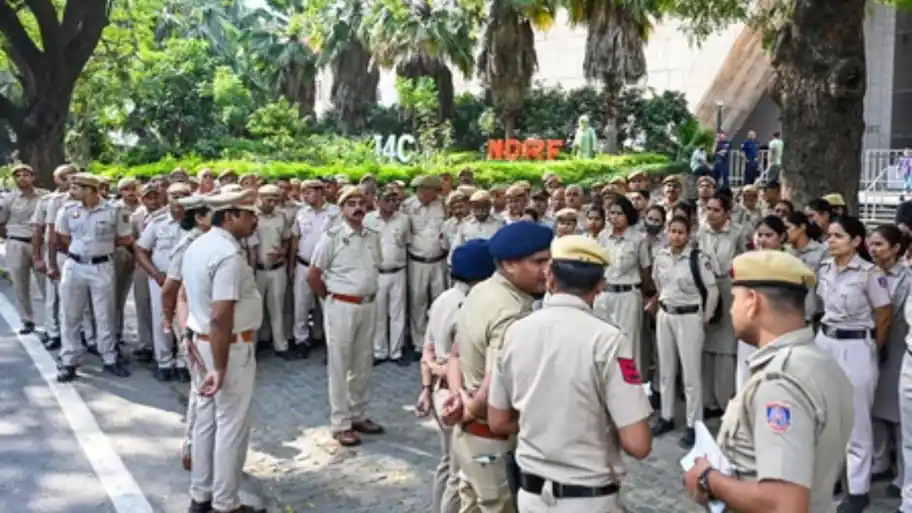
Delhi Police on Friday defended the security arrangements and restrictions put in place in the national capital ahead of a protest scheduled for Saturday, stating that the measures were essential to ensure public safety, prevent overcrowding and minimise disruption to the city’s routine activities.
At the same time, important establishments and the offices of the constitutional bodies are in New Delhi,” the statement said. In a statement, the police acknowledged the public’s right to protest but emphasised that the authorities were also responsible for safeguarding residents, workers, businesses, police personnel and key establishments, including the offices of constitutional bodies located in the national capital. “We want to put the security precautions and restrictions in place in Delhi and around Jantar Mantar in proper perspective. People have a right to protest.
More than 200 personnel were injured during the protests, while over 2,000 people with criminal antecedents took part, contributing to the violence, according to the police statement. Highlighting the limitations of the protest site, Delhi Police said Jantar Mantar could accommodate only around 1,000 people at a time.
“Seeking permission to protest is not anti-democratic,” the statement said, adding that advance planning was necessary to ensure that demonstrations could be conducted peacefully without affecting residents, workers, shopkeepers and businesses. Delhi Police referred to protests held at Jantar Mantar in July, claiming that although permission had been sought for a one-day demonstration, the protest continued for a month. It added that the authorities had to consider the city’s capacity to manage large gatherings without disrupting daily life and economic activity. The police also emphasised that organisers were responsible for informing attendees about the legal consequences of participating in a protest held without permission.
