
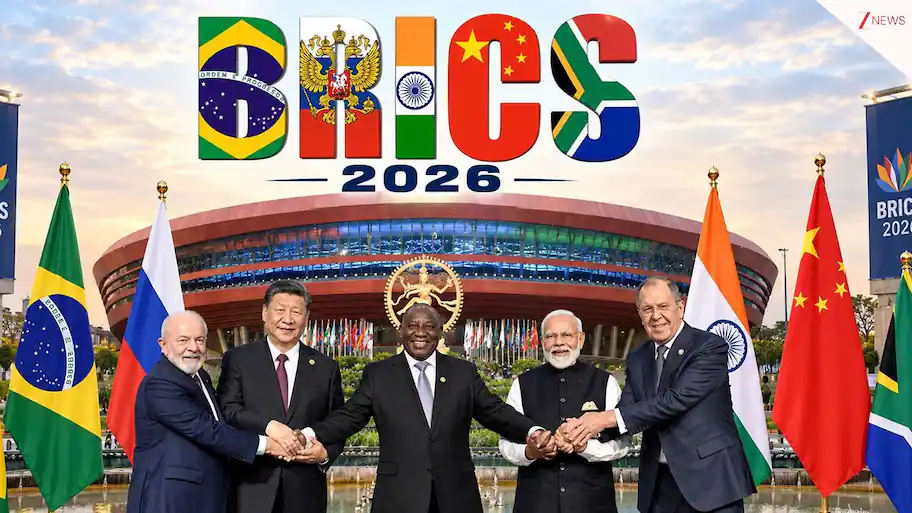
BRICS Summit 2026: New Delhi is preparing to host the BRICS annual summit on September 12 and 13, with India holding the group’s chair at a time when its members have very different foreign policy priorities.
A joint declaration that receives the backing of all 11 members would give New Delhi a diplomatic achievement as chair. The negotiations around that document could offer a useful measure of how much common ground the expanded BRICS can find when its members have different priorities.
What BRICS wants from the grouping
The summit will bring together 11 countries at one table, including India, China, Russia, Iran and the UAE. A joint declaration at the end of the summit will need agreement from all 11 countries. India will therefore have to carefully manage the wording of the final document. Because they serve the economic interests of several members, these objectives are easier to discuss collectively. The September 12-13 summit will therefore test India’s ability to build agreement among countries that do not share the same position on many major international issues.
Getting the leaders into the same room is only one part of the task. The difficult job for India will come when talks move towards a joint declaration that all members must accept. India and China will attend the summit as major BRICS members while their border dispute is still unresolved. Russia will come with its own set of tensions with Western countries, while Iran also has a complicated relationship with the West. The United Arab Emirates (UAE) has interests in the Middle East that do not always match those of Iran. That mix gives India a difficult diplomatic assignment. Each country has its own priorities, partnerships and interests, and those differences can affect even the most basic language in a joint statement. BRICS has added several new members in recent years. It now includes countries with different political systems, economic interests and foreign policy positions. The larger group gives the bloc greater reach, while also making agreement on sensitive international issues difficult. India’s role as host and chair gives New Delhi the responsibility of steering talks towards areas where members can find common ground. The talks could become complicated if members take different positions on geopolitical issues. China may have objections to one part of the document, Russia may have reservations about another, while Middle Eastern members could have their own priorities on issues involving regional security and international relations. Even a broad statement can require lengthy negotiations when several countries have different interests. The economic agenda provides some common ground. BRICS members have been discussing ways to reduce dependence on the US dollar, increase trade among member countries and give developing economies a stronger voice in international institutions. The task becomes more complex when talks turn to active geopolitical disputes, where national interests take priority. The expanded BRICS also means India has to work with countries that have relationships with each other that can be complicated. China and India have their border dispute, Russia is dealing with tensions with the West and Iran’s relations with Western powers are complicated. The UAE brings another set of regional interests into the group. India’s task in Delhi will go beyond arranging meetings and hosting leaders. As chair, it will have to keep talks moving while finding language that the entire group can accept.
