
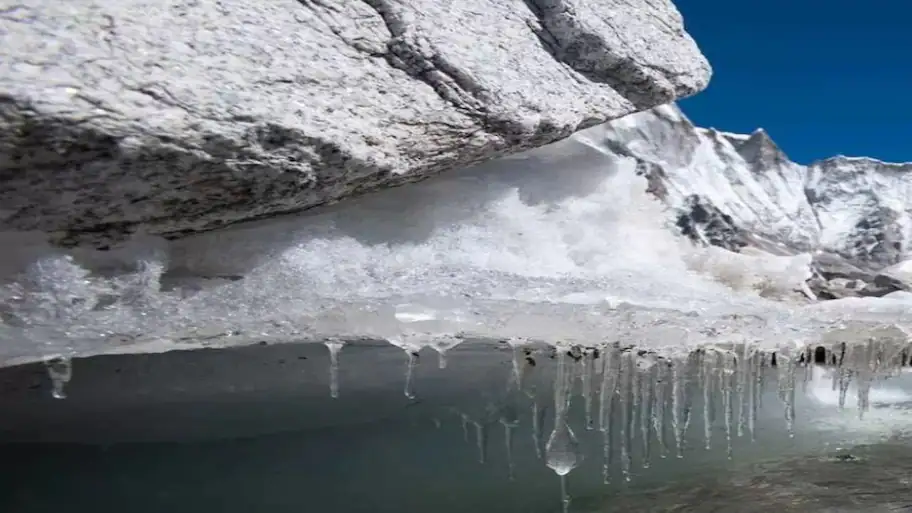
New Delhi: An international study has identified 407 glacial lakes across the Hindu Kush Himalaya (HKH) region that are at risk of bursting. The findings show a threat from Glacier Lake Outburst Floods (GLOFs) across the mountain region.
Why early warning systems is important
Its 2022 report also identified GLOFs as a hazard in the Hindu Kush region. Chapagain has called for greater sharing of information between countries so that changes in glaciers and emerging risks can be detected earlier. Data from satellites, weather monitoring systems and river gauges can help authorities understand what is happening in high-altitude areas before a flood reaches populated regions.
The new study follows earlier warnings from the Intergovernmental Panel on Climate Change (IPCC).
The United Nations University Institute for Environment and Human Security (UNU-EHS) in Bonn conducted the study, which examined 493 recorded GLOF events from the oldest available records through 2024. Glacier scientist Dipesh Chapagain headed the research, which examined how the risk has changed across the Hindu Kush Himalaya over the decades. Titled ‘Glacial Lake Outburst Flood Risks, Response Strategies and Adaptation Gaps in the Hindu Kush Himalaya Region’, the study describes GLOFs as a major and rising threat to the HKH region.
Why are glacial lakes becoming a threat?
The study recorded 199 GLOF events in China between 1835 and 2025, the highest number among the countries covered. Pakistan recorded 152 events, followed by India with 62 and Nepal with 58.
He said recent flooding near the Nepal-China border shows the difficulties faced by authorities in detecting and communicating such hazards in time. Chapagain and his colleagues study GLOF events in the Hindu Kush Himalaya through the Global Mountain Safeguard Research Programme (GLOMOS).
