
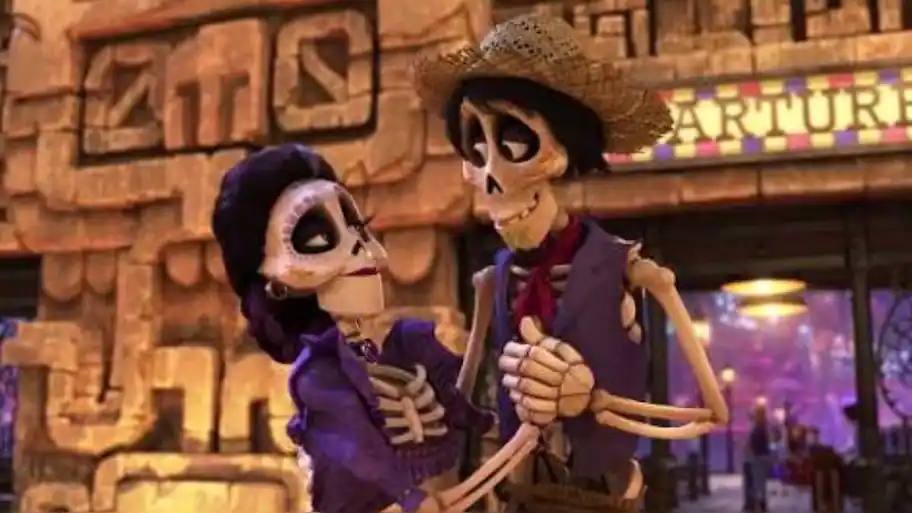
Dialogue of the day: Coco spends much of its story tangled up in a family rift, decades of hurt, an ancestor who was cast out and nearly erased from memory. And yet, underneath all that conflict, this one line keeps surfacing, spoken as a kind of anchor whenever things threaten to fall apart completely. It’s less a plot point and more the emotional thread holding the whole film together.
Released in 2017 and directed by Lee Unkrich, Coco follows Miguel, a young boy with a passion for music that clashes with his family’s generations-old ban on it, as he journeys into the Land of the Dead to uncover the truth about his family’s past. Because it captures something true about family that outlasts even its deepest conflicts, featuring the voice of Alanna Ubach as Mamá Imelda, the film became one of Pixar’s most emotionally resonant releases, drawing on Mexican traditions around Día de los Muertos, and this line remains one of its most quoted precisely.
Because it’s the kind of truth people are prone to forgetting exactly when they need it most, in the middle of a fight, during a long silence, after a loss, it’s treated as something that needs to be said again and again,.
On its own, it sounds like a simple, gentle send-off, the kind of thing said before a goodbye. But in the context of the film, it carries much more weight. Imelda has spent decades angry, hurt, and unwilling to forgive the past, and yet even she understands that anger was never the same thing as a lack of love. The line isn’t about pretending everything is fine. It’s about insisting that love remains, underneath all the mess, even when forgiveness hasn’t fully arrived yet. There’s also something quietly significant in how often this line gets repeated across the film, passed almost like a blessing from one generation to the next. It’s not framed as advice given once and forgotten. What makes the line resonate beyond the film is how universally it applies. Most families carry some version of unresolved tension, disagreements that never fully healed, distance that crept in over the years. This line doesn’t ask anyone to fix all of that immediately. It just asks them not to forget the one thing underneath it all, that love, however complicated it’s become, was never actually gone.
