
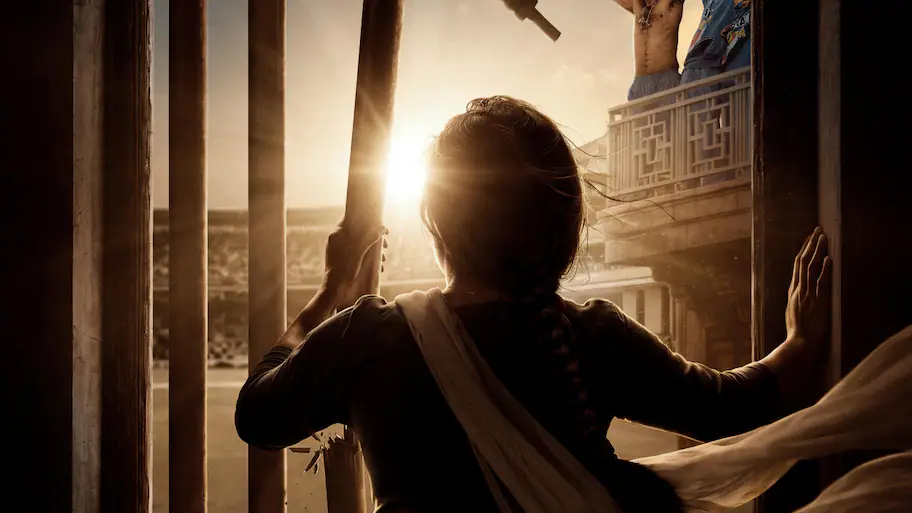
Directed by: Abhinay Deo
Written by: Agnello Oswin Dias Language: Hindi Cast: Plabita Borthakur, Seema, Ankur Vikal, Samidha Guru, Krishna Gokani & Mox Rathore Duration: 1 hour 18 minutes What works in her favour is the way she approaches Tara’s conflict. 22 October 2026. As a result, the emotional journey sometimes feels more abrupt than it should.
The character is caught between the restrictions of her upbringing and the possibility of a different future, and Borthakur captures the tension inherent in that situation. Her performance adds emotional weight to a story that occasionally struggles to explore its central character in sufficient depth. However, what remains relatively underexplored is the gradual development of that dissatisfaction into active resistance. Tara’s father emerges as another particularly memorable presence. His character adds an important dimension to the family dynamic and the patriarchal environment in which Tara grows up. The performance is compelling, bringing a strong presence to the scenes he inhabits and giving the domestic conflict much of its emotional intensity. Abhinay Deo deserves appreciation for choosing a premise that attempts to look beyond the conventional boundaries of a sports drama. Instead of relying entirely on the excitement of cricket, the director uses the sport as a way to explore questions of identity, freedom, and social conditioning. It is an ambitious approach, and the film’s larger message gives it a purpose beyond the usual underdog narrative. One of the most compelling aspects of Doosra is its exploration of gender discrimination. Through Tara’s experiences, the film examines how patriarchal traditions can restrict a young woman’s choices long before she has the opportunity to decide what she wants from life. The restrictions are not presented merely as individual disagreements; they reflect a wider social mindset in which a girl’s ambitions can be treated as secondary to family expectations and established norms. The film also raises important questions about identity and personal freedom. What happens when an individual begins to question the role assigned to them by society? How difficult is it to imagine a different future when the people and institutions around them continue to reinforce traditional expectations? These questions give Tara’s story its broader relevance. At its core, Doosra: India’s Other Freedom Struggle is a film with a promising premise, a sincere central performance, and a social message that deserves attention. The connection between cricket and a young woman’s struggle for freedom offers an interesting foundation, while Plabita Borthakur brings conviction to Tara’s journey. Tara’s father also makes a strong impression, and Abhinay Deo’s direction gives the film a clear sense of purpose. The cinematography further complements the narrative, helping establish the atmosphere in which the story unfolds. The film may not hit a six in every department, but it deserves credit for attempting to play a different game. It is a thoughtful, well-intentioned drama whose message stays relevant even when its storytelling falls short of its potential. For viewers interested in sports dramas that look beyond the playing field and examine the social realities surrounding it, Doosra offers enough to reflect on long after the final whistle.
Doosra has been released in theatres today, i.e.
The ending of Doosra works best when viewed through the larger ideas the film has been building around cricket, identity, and liberation. Rather than treating the story as just another sports drama, the film invites the audience to consider what freedom means on a personal level. The sporting context gives the narrative a broader dimension, while Tara’s journey brings that idea into the intimate world of family and social expectations.
Rating: 3/5 Doosra movie review: Amid the wave of recent movie releases, a unique film has arrived in cinemas, blending cricket with a story that might just blow your mind. Directed by Abhinay Deo, the Hindi sports drama Doosra: India’s Other Freedom Struggle, released on October 23, 2026, blends a landmark moment in sporting history with a fictional coming-of-age narrative. Because of the themes it chooses to explore, doosra leaves a lasting impression.
Starring Plabita Borthakur in the lead role, let’s find out whether this film lives up to the anticipation or falls short of expectations. At the heart of the story is Tara, played by Plabita Borthakur, a spirited and defiant young girl growing up in a conservative household in a small town in Rajasthan. As she navigates rigid patriarchal traditions, deep-rooted social prejudices, and her own struggles with identity, Tara embarks on a journey of self-discovery and challenges the norms that seek to define her life. The connection between cricket and a coming-of-age story is undoubtedly one of Doosra’s biggest strengths on paper. Cricket becomes more than just a sport here; it serves as a symbol of aspiration, resistance, and the freedom to dream beyond the limitations imposed by society. The film attempts to connect a sporting milestone with Tara’s personal journey, creating an opportunity for a story that works on both historical and emotional levels However, the two elements do not always blend as seamlessly as they should. the connection sometimes feels more conceptual than organic Although the film establishes an interesting parallel between cricket and Tara’s struggle for independence. The broad direction of the narrative becomes apparent fairly early, and the eventual outcome does not offer many surprises. Given the historical sporting context, the destination is largely known, which leaves the screenplay with the challenge of making the journey itself unpredictable. Unfortunately, the film does not always succeed in doing so. Even when the story has something meaningful to say, its progression can feel familiar. The screenplay maintains a reasonable balance between the sports drama and its social commentary. Neither element completely overwhelms the other, and the film manages to communicate several important ideas through its narrative. Its limitations lie less in the premise itself and more in how effectively that premise is developed on screen. Plabita Borthakur brings sincerity to the role of Tara, a young woman attempting to understand her place in a world that has already decided what her life should look like.
