
The Joint List and Ra’am, two Arab-led political groups, are projected to win a combined 19 seats in the 120-member Knesset, Israel’s parliament. Arab-led parties are projected to win a record number of seats in Israel’s parliament. This could give them a stronger position in talks over the formation of the next government.
Israel election: Four possible outcomes as government talks continue
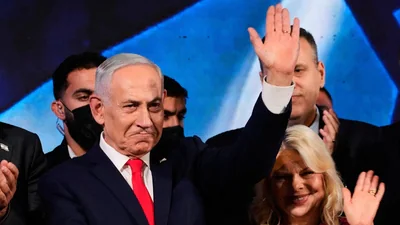
Partial results show Prime Minister Benjamin Netanyahu’s bloc with 54 seats, while the opposition alliance led by Gadi Eisenkot has 49 seats. Neither side has secured the 61 seats needed for a majority in the 120-member parliament. Earlier reporting noted: Israeli Arab parties hold key as Netanyahu falls short of majority Results from Israel’s hard-fought election pointed on Wednesday (October 28, 2026)to no clear winner as a leader of the Arab minority appealed to a hesitant opposition to join forces to end the divisive reign of Prime Minister Benjamin Netanyahu. Earlier reporting noted: But neither looks set to reach the 61-seat threshold for a majority. With 77% of ballots counted, Mr. Netanyahu’s bloc had 54 of the 120 seats in parliament and Eisenkot’s opposition had 49.
Because several Jewish-led Israeli parties oppose forming a government with Arab-led groups, observers say their electoral gains may not translate into government power.
Honaida Ghanam, director general of the Palestinian Forum for Israeli Studies in Ramallah, said this political exclusion limits the ability of Arab citizens to turn their votes into influence over government decisions, as quoted by Al Jazeera. Political analyst Ahmed Najar said the opposition’s reluctance to work with Arab parties is ideological rather than practical. Najar said a partnership could be the most realistic way for Eisenkot to replace Netanyahu, as quoted by Al Jazeera. Naftali Bennett has also said he wants to exclude Arab parties from the government. Bennett, whose alliance is currently in third place, has moved away from earlier efforts to work across political lines and has said he wants only Zionist parties in government.
The election has not produced a clear winner so far. However, Arab parties are not yet certain to become kingmakers. He argued that Eisenkot has set conditions for Arab parties and ruled out depending on them, even though their support could be necessary to form a government. Netanyahu, Israel’s longest-serving Prime Minister who is allied with far-right and ultra-Orthodox Jewish parties, and Gadi Eisenkot, a former military chief leading a broad opposition bloc, vowed that they would seek to form the next government.
Earlier reporting noted: Both Mr.
Ra’am and Joint List offer support to opposition
Omar Shaban, director of Palthink for Strategic Studies, said Abbas had indicated a willingness to cooperate if Eisenkot became prime minister. Tibi said the bloc was extending its hand to the opposition to remove Netanyahu from power, according to Israeli media reports. Ra’am leader Mansour Abbas has shown that he may be willing to join an Eisenkot-led government . Another Joint List leader, Ahmad Tibi, has also reached out to the opposition alliance. However, it remains unclear whether the Joint List would formally join a governing coalition or support one from outside parliament.
