
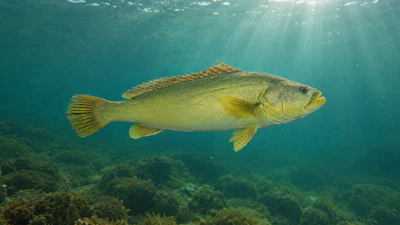
2026, researchers found traces of the Chinese bahaba in western Hong Kong waters, according to a Lingnan University press release dated July 23. Sometimes the biggest news can come from the smallest clues. The release calls it the first scientific discovery of this fish in the city in over a decade. The fish itself was not caught. The evidence came from DNA left behind in seawater.
Because researchers can verify a species ’ presence without having to catch or disturb it, water sampling is a less invasive method. The test can identify the species without confusing it with other fish, and the release said lab tests and computer analysis confirmed this.
The team says the tool could help groups evaluate the effectiveness of juvenile release programs. Fish release DNA in tiny bits of mucus and waste as they swim. Scientists call this environmental DNA, or eDNA. Lingnan University’s Division of Science jointly developed an eDNA test for the Chinese bahaba using mitochondrial genome sequences. The work was led by Prof. Jack Ip Chi-ho of Lingnan University and Prof. Junjie Wang of South China Normal University. The study was supported by the Marine Ecology Enhancement Fund of the Airport Authority Hong Kong and two other research projects. Ip explained that the fish is so rare that it is very unlikely to be encountered in regular surveys. Such surveys usually involve trawling or capture, and require skilled staff and a lot of money. They can also harm seabed habitats and put non-target species at risk. It could also help biodiversity monitoring in the Guangdong-Hong Kong-Macao Greater Bay Area.
