
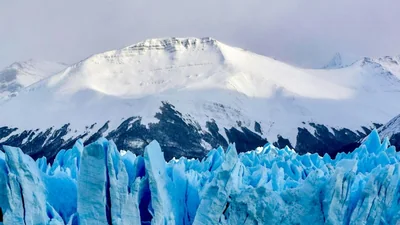
The world’s widest glacier is melting “more aggressively” than earlier projections said. Its effect on global sea level rise could be twice the current estimates, according to new research by a team of glaciologists.
Thwaites Glacier in West Antarctica is known as the “Doomsday Glacier” because its collapse could cause serious damage, as per CNN. Glaciologists from the University of California , Irvine, and NASA’s Jet Propulsion Laboratory developed a new ice sheet model to better understand what is happening beneath the glacier, according to CNN. The glacier makes it difficult for scientists to predict future sea level rise.
After updating the model to include a “grounding zone,” the scientists found that Thwaites Glacier could add up to 1.2 inches to global sea levels by 2100. The findings were published Monday in the journal Nature Communications.
This is twice the amount predicted by earlier estimates, and it could happen even without further global warming.
The scientists plan to travel there in 2028 and set up instruments to record the flow of seawater in and out.
As per CNN, Rignot said the next step is to get observational data from the grounding line. “We have been aware of the impacts of climate change on our planet’s sensitive ice sheets for decades,” Rignot said, “but a mounting realization gained in recent years of what is really happening on the undersides of glaciers like Thwaites is leading to an even greater sense of alarm. He said the world must cut planet-heating pollution now to limit the impacts. But he warned, “even if we do, we can expect higher sea levels in the future resulting from the damage that has already been done.”
