
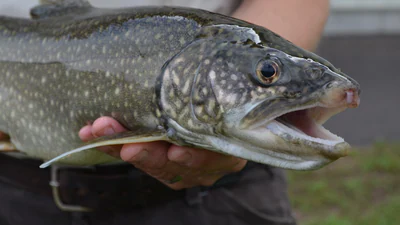
The target is an invasive fish first detected in the lake in 1994: lake trout.
By October, the seasonal fishing operation typically winds down after deploying thousands of miles of gillnets, according to the National Park Service (NPS). During summer mornings at Yellowstone Lake, workers in rubber boots and life jackets pull up gillnets in an effort to reverse years of ecological damage.
By the mid-to-late 2000s, the number of cutthroat trout spawning in streams had fallen to just 5% to 10% of late-1970s levels, according to the NPS. A 2020 study published in Fishes by Todd Koel and colleagues also documented the invasive fish’s reproductive potential. A female lake trout weighing 5 kilograms can produce 6,000 to 8,000 eggs in a single spawning event. The NPS reported that crews caught 264,000 lake trout in 2024, bringing the cumulative number removed to 4.9 million. The agency also estimated that the adult lake trout population had declined by about 90% from its peak. In the Fishes study, cutthroat trout abundance was still below management targets in 2019. Researchers found that larger fish, exceeding 400 millimeters (about 16 inches), had become more common and that individual fish weights had doubled. In October 2019, researchers used a helicopter to spread 18,000 kilograms of organic pellets over a lake trout spawning site near Carrington Island. Yellowstone Forever contributes approximately $1 million annually to native fish conservation, according to the NPS, while volunteer anglers help researchers collect fish and record data.
Koel, who leads Yellowstone’s Native Fish Conservation Program, has reported that cutthroat trout are returning to spawning streams and that bears and bald eagles are feeding near them again. The effects extended beyond the fishery. Anglers caught fewer fish, park rangers saw fewer animals around the lake, and some fishing guides reduced tours in affected areas. The decline threatened a vital food source for several native wildlife species . The researchers also found that young lake trout in Yellowstone Lake appeared to survive at rates four to six times higher than those of young fish in their native range. Large-scale removal efforts have continued. Ospreys have also begun appearing in the area. However, recovery remains incomplete. They suggested that reduced competition for food and other resources could explain these changes, pointing to improved conditions for surviving trout even though the population had not fully recovered. The study also examined efforts to reduce lake trout reproduction. The treatment was intended to reduce oxygen available to developing eggs. Traps set the following spring caught no lake trout fry. The researchers interpreted the result as evidence that the treatment likely killed embryos at the site, but the finding did not establish whether the method would be effective across the entire lake. The suppression program continues to rely on funding, fieldwork, and monitoring. Koel has compared lake trout control with maintaining roads and repairing boilers, describing it as essential work that requires ongoing attention.
Despite the removal of millions of invasive fish, cutthroat trout abundance remained below management targets in the latest year assessed by the 2020 study. Monitoring and subsequent population estimates will be needed to determine how closely the native trout are approaching those targets.
