
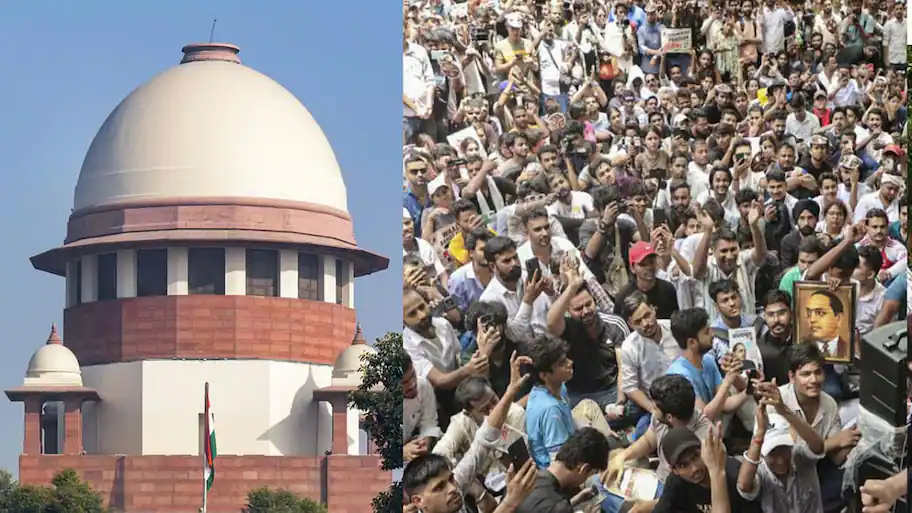
New Delhi: Can the government restrict public movement, disrupt internet access and detain thousands of people during a protest without suspending their fundamental rights?
Guruswamy argued that Article 19 rights could be suspended under the constitutional provision only in the specific circumstances laid down for a national Emergency. A bench of Justices Joymalya Bagchi and V Mohana heard petitions challenging the police action and restrictions imposed around the October 10 protest. Because the petitions had not been supplied to it, appearing for the government, Solicitor General Tushar Mehta disputed the allegations and said the Centre needed time to respond.
Her reference brought the distinction between emergency powers and the ordinary limits on government action into the courtroom.
Article 358 applies only during a constitutionally proclaimed Emergency on the specified grounds. Once the relevant Emergency ends, laws that could not otherwise have been made cease to have effect to the extent set out in Article 358. Article 358 must also be distinguished from Article 359. Article 359 allows the president, during a proclaimed Emergency, to suspend the right to move courts for enforcement of specified fundamental rights, subject to constitutional limits. Article 358 deals specifically with the operation of Article 19 during an Emergency declared on grounds of war or external aggression. SG Mehta told the court that restrictions had been imposed at 45 of the 303 stations in the Delhi Metro network on October 10.
The bench said the administration could take lawful measures if there was a serious threat to public order. It also told protesters to maintain peace and asked that lawyers be allowed to perform their professional duties without obstruction. This does not mean the government can suspend freedom of speech whenever it faces protests or a law-and-order challenge. Its operation is also subject to conditions in the Constitution, including requirements governing laws made under the provision. The Supreme Court’s intervention followed restrictions imposed ahead of the CJP’s planned demonstration at Jantar Mantar. Protesters were demanding Kumar’s resignation over alleged irregularities in the Special Intensive Revision (SIR) of electoral rolls. The Election Commission has defended the revision exercise, while Opposition parties have alleged that it could exclude eligible voters. The government rejected the allegations made in the petitions. The court sought a response from the Centre and agreed to hear the parties further.
