
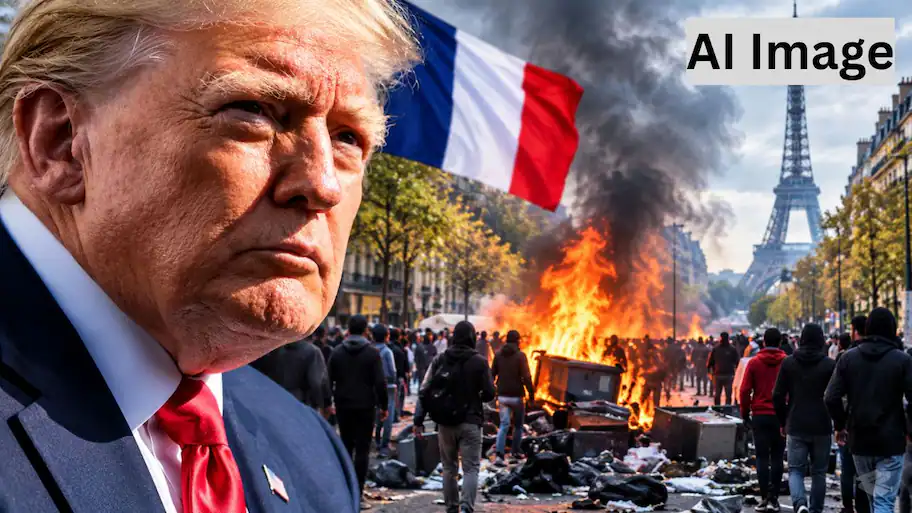
Unrest in major French cities has escalated far beyond local classroom grievances, attracting direct commentary from international leaders and reshaping public discussion around European public order. In today’s DNA, Zee News Managing Editor Rahul Sinha decodes how a dispute over underfunded state schools in France has evolved into daily standoffs, drawing sharp claims about mass migration and state control from overseas observers.
US President Donald Trump weighed in on social media, claiming that the unrest had little to do with local school funding. Trump posted, “The violent protests happening in France are not really about bad school conditions or a lack of teachers. Mass migration in France has gotten completely out of control. These riots are an effort by radical Islamic elements to assert dominance over a once great nation.”
Interior Ministry records show that more than 7,000 people have been detained since the demonstrations began, with young students making up a vast majority of those held. Local councils in the Centre-Val de Loire region estimate that repair bills for burnt school furniture and structural damage will exceed 20 million euros. President Emmanuel Macron’s administration faces mounting pressure as more than 200,000 people took to the streets nationwide.
The statement instantly shifted attention towards France’s long-standing debates over integration and border policy. French Foreign Minister Jean-Noël Barrot responded directly during a European summit in Brussels. Barrot rejected external assessments, stating, “If we do not write our own story, others will write it for us. He insisted that domestic authorities were fully capable of managing public safety without external commentary. Government officials and left-wing parties counter that blaming minority communities misdiagnoses systemic state neglect. They argue that the violence stems from decades of underinvestment in working-class schools and public services. With local police units stretched thin and regional leaders warning of further damage, the debate between structural economic reform and stricter law enforcement remains intensely contested across the country.
