
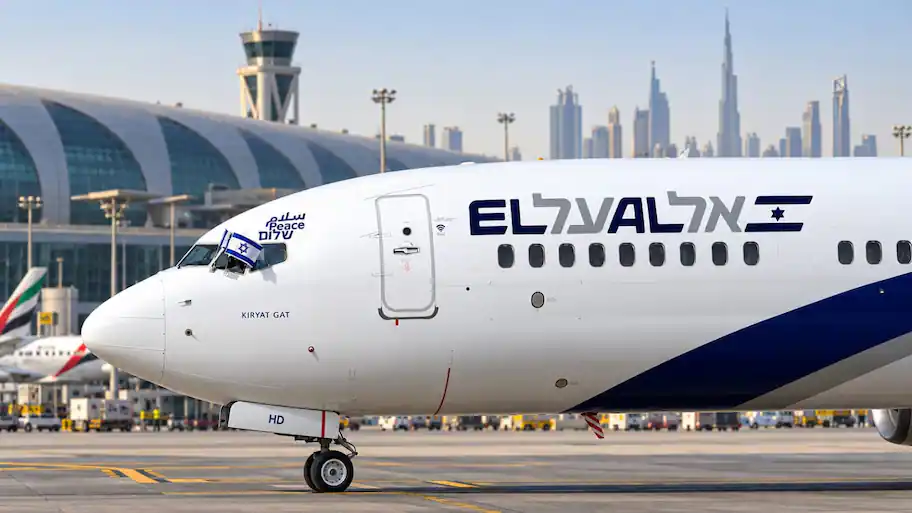
Hours before the first El Al rescue flight was due to operate, the UAE withdrew landing approval for Israeli carriers. The suspension cut off one of the main direct routes used by Israeli travellers returning from the UAE. Israelis stranded in Dubai were expecting special flights home on Friday after Flydubai suspended its Tel Aviv service following a violent cockpit attack.
The chain of events started on September 30 aboard Flydubai flight FZ1073 from Dubai to Tel Aviv. Israeli Prime Minister Benjamin Netanyahu said 174 people were on board. El Al priced its one-way ticket at $249, while Arkia and Israir also announced special fares.
Israeli officials said the co-pilot stabbed Indian captain Smit Machchhar and then tried to bring down the aircraft. Flydubai said the reason for the attack was still under investigation and warned against “premature speculation”. Ziontours Jerusalem chief executive Mark Feldman told The Times of Israel that every day Flydubai stayed suspended meant “at least 1,700 Israelis stranded”.
The plane dropped sharply before passengers and crew entered the cockpit and overpowered the co-pilot. Machchhar, who had been injured, managed to release the cockpit door. Two other Flydubai pilots travelling on the aircraft then took control and landed safely at Tabuk in Saudi Arabia.
Prime Minister Narendra Modi called him a “hero”, saying his actions helped save lives and prevent a tragedy. Machchhar has since received praise in India and Israel for helping the passengers reach safety despite his injuries.
Flights LY974-1 and LY972 were cancelled.
Israel’s Transportation Ministry later said the services were still expected to go ahead once security arrangements and coordination were completed. By Friday morning, El Al said the approval had not been restored. In a notice to passengers, the airline said that “due to the cancellation of approval for Israeli companies to land in Dubai, as was reported by the authorities in Israel, we are forced to cancel, at this stage, our rescue flights”. The UAE has not publicly said that the cockpit attack itself was the reason landing approval for the Israeli rescue flights was withdrawn.
Flights listed for the following week were still on the schedule, though they were already sold out. The attack caused Flydubai to suspend its Tel Aviv services, which left passengers stranded and created the need for the rescue flights. Reports early on Friday said the UAE had cancelled permission for Israeli airlines to operate the special flights.
