
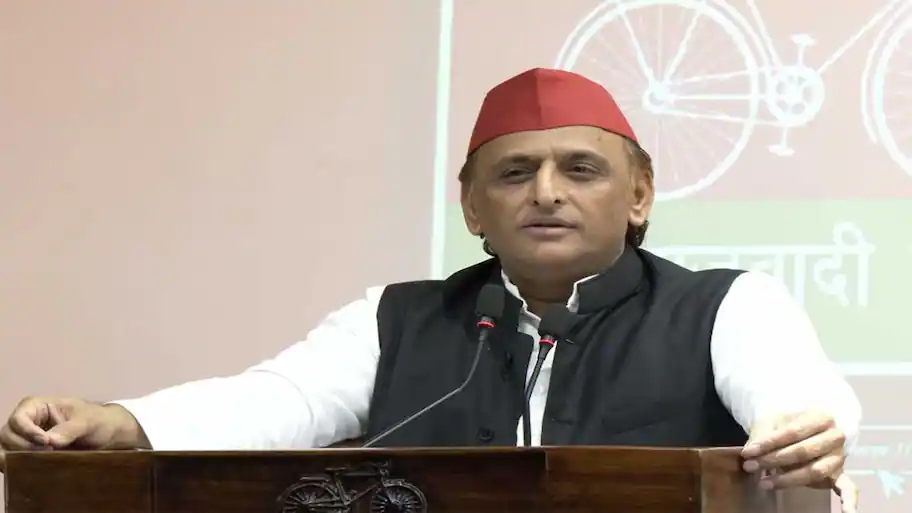
Lucknow: Delhi’s viral “ kachori-samosa ” protest slogans have made its way into Uttar Pradesh politics, with Samajwadi Party (SP) chief Akhilesh Yadav turning the Gen Z slogan into a spicy taunt aimed straight at the ruling Bharatiya Janata Party (BJP).
Speaking in Lucknow, he said, “In the coming days, the PDA and Gen Z will wipe out the BJP. Didn’t you see the slogans being raised in Delhi? ‘One kachori, two samosas. We were talking about just one samosa. ‘ Ek kachaudi, ek samosa, BJP par nahin hai bhadosa (One kachaudi , one samosa , we don’t trust the BJP).’”
A 17-year-old girl was gang-raped at a park in south Delhi, while incidents involving girls in Bihar’s Jamui and Samastipur also featured in the protests and public reaction. Asked about the party’s third candidate, Akhilesh said that the name would be announced after the numbers of legislators were worked out.
The line is a play on the slogan “ Ek kachaudi, do samosa, in mardon ka kya bhadosa (One kachaudi , two samosas , who can trust these men?”, which was heard at women’s safety protests in Delhi and has spread across social media. Yadav changed the last part of the slogan to “we do not trust the BJP”, turning the protest chant into an attack on the party. The “ ek kachori, do samosa ” slogan became one of the most shared lines from the demonstrations. Other chants included “ Mere sar mein dard hai, iska karan mard hai (My head is aching, and men are the reason)”, “ Oh purush, kal aana (Hey men, come back tomorrow)”, “ Hamari azadi se jisko dard hai, who sab namard hai (Anyone who has a problem with our freedom is a coward)” and “ Sharm nahin hai mardon mein, aurt kyun hai parde mein (Men have no shame, so why should women be behind a veil)?”. Students also used slogans such as “ Tod ke rakh do who samaj, nari jismein bandhi hai aaj (Shatter the social order that keeps women in chains today)”, “ Nari apne aap ki, nahin kisi ke baap ki (Women belong to themselves, nobody owns them)” and “ Rapist ko andar karo, ladkiyon ko nahin (Jail the rapists, free the women)”. Another slogan heard during the protests was “ Phool nahin, chingari hai, yeh Bharat ki naari hai (Not a flower, but a flame, this is the resilient woman of India)”. Videos of students chanting “ Ek kachaudi, do samosa ” circulated online, followed by users creating their own rhyming versions. He said, “PDA and Gen Z alliance poised to decimate the BJP in upcoming elections. The former Uttar Pradesh chief minister referred to an earlier idea of his involving a “bhajan jamming” programme. He said, “What started as our idea for a bhajan jam session was overheard and brought to life by someone. He said, “Consolidating votes and bringing MLAs on board doesn’t happen overnight, it is a long-haul effort. He also said that some people who had earlier left the party wanted to return and that several legislators were also interested in coming back. From street demonstrations to high-stakes politics, the trajectory of “ek kachoudi, do samosa” proves how fast raw protest language can become a campaign weapon. Social media users traced it to an older dialogue from the television show “Taarak Mehta Ka Ooltah Chashmah”, where a similar line was used with different words. Among them was “ Thande samose garm karo, mard zaat sharm karo (Stop making excuses, men; do your part and hold yourselves accountable)”, another line built around the same food-based rhyme that helped the original slogan spread online.
Students used short and rhyming slogans to raise issues around women’s safety and public spaces. His use of the line also brought a slogan popular among Gen Z protesters into Uttar Pradesh’s political campaign. The use of samosa in political slogans is not new in north Indian politics. One of the best-known examples from Bihar was the slogan, “ Jab tak rahega samose mein aalu, tab tak rahega Bihar mein Lalu (As long as there is a potato in the samosa, Lalu will rule Bihar politics). The slogan was associated with former Chief Minister Lalu Prasad Yadav and became a familiar political rhyme in Bihar. The latest slogan has a different setting. It emerged during protests by women and students in Delhi after recent incidents involving crimes against women and girls. The wording has helped the slogans travel beyond the protest sites. Some social media posts turned the lines into a meme-style exchange. Akhilesh used the slogan while speaking about Gen Z and the political role he expects young voters to play. The PDA is the term used by the Samajwadi Party for its political social coalition of backward classes, Dalits and minorities. Akhilesh has also been seeking to bring younger voters into the party’s political messaging. He added that the party would soon organise a programme for young people and that its manifesto would contain several provisions for them. The slogan reference came during questions about the SP’s preparations for the Rajya Sabha election. What began as a student-led cry for women’s safety was redirected by Akhilesh, who co-opted its catchy cadence to strike at the ruling party. There has also been interest in where the phrase came from. The slogan has since taken on a new life in the protests and online posts. Akhilesh’s version gives it another setting, this time in Uttar Pradesh’s electoral politics. The chants used in the protests also show the range of messages being used by young women. Along with humour and rhyme, the slogans directly refer to sexual violence, restrictions on women and demands for greater freedom in public spaces.
