
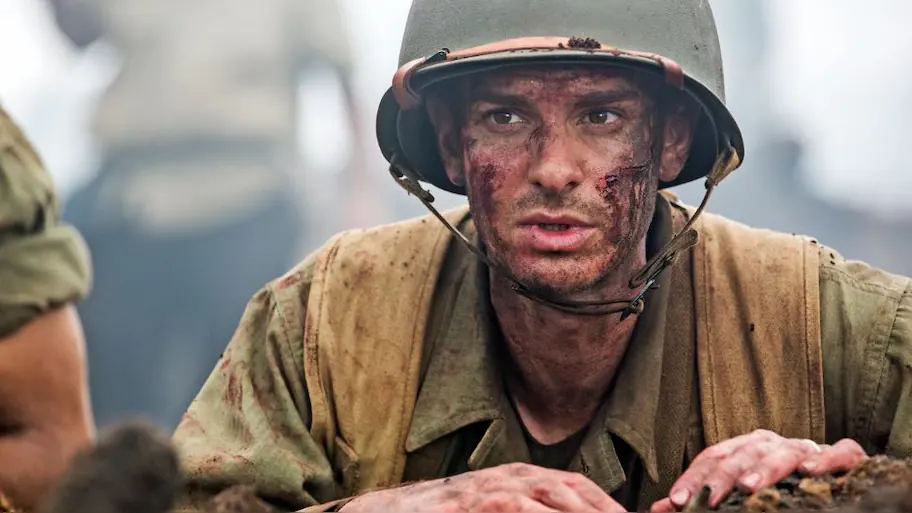
Dialogue of the Day: Desmond Doss isn’t a typical war film protagonist. He enlists as a medic, refusing to touch a weapon on religious grounds, in an environment where that refusal makes him a target of ridicule and suspicion from the very men he’s trying to serve alongside. This line comes as his own explanation for why he wants to be there at all, despite every incentive to simply stay home.
Released in 2016 and directed by Mel Gibson, Hacksaw Ridge tells the true story of Desmond Doss, a devout Seventh-day Adventist and conscientious objector who served as a combat medic during the Battle of Okinawa, saving numerous lives without ever carrying a weapon. Because it reframes what courage actually looks like in his story, that distinction matters. Because it applies to any situation that feels overwhelming or broken beyond repair, this line resonates. Because it captures, in a single sentence, the entire philosophy that carried Doss through one of the war’s bloodiest battles, starring Andrew Garfield in the lead role, the film became known for its unflinching depiction of war alongside its central message about conviction and nonviolence, and this line remains one of its most quoted precisely.
“With the world so set on tearing itself apart, it don’t seem like such a bad thing to me to want to put a little bit of it back together.” – Desmond Doss, Hacksaw Ridge Doss isn’t arguing against war itself in this moment, or claiming some moral high ground over the men fighting around him. He’s explaining a much more personal conviction, that in a world actively destroying itself, choosing to save rather than take life isn’t naive or weak, it’s simply his way of contributing something the world desperately needs more of. Everyone around him is focused on the destruction. He’s chosen to focus on the repair. The easy assumption is that bravery in war means picking up a weapon and fighting. Doss’s line suggests a different kind of bravery entirely, walking into the same danger, facing the same risks, but doing it unarmed, driven by the belief that pulling wounded soldiers to safety matters just as much as anything happening on the front line. He’s not opting out of the war. He’s choosing a different role within it, one that costs him just as much courage, arguably more, given he does it without any means of defending himself. There’s something worth sitting with in the phrase “put a little bit of it back together. Doss doesn’t claim he can fix the war, or stop the destruction entirely. He’s not being grandiose about his own impact. He’s simply saying that in the middle of something so enormous and destructive, doing his small part to repair rather than destroy still felt worth doing. It’s a modest ambition, framed against an enormous backdrop, and that modesty is part of what makes it land so genuinely. Not everyone can fix the whole problem. But Doss’s philosophy suggests that contributing your own small, deliberate act of repair, even amid something far larger than yourself, still counts for something, and might be exactly the kind of courage the moment actually calls for.
