
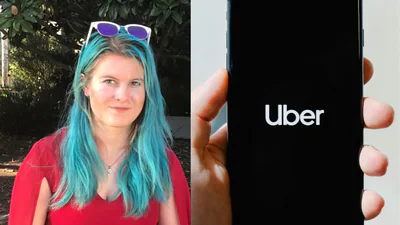
In a significant ruling, a California court has ordered Uber to pay $40 million to the family of Emily Normandin-Parker, who was tragically killed in 2023 after being struck by a vehicle on a freeway. This incident occurred after her Uber driver forcibly removed her from the car due to an incident involving her friend, who vomited inside the vehicle. More than three years have passed since the 23-year-old’s death, highlighting ongoing concerns about passenger safety and driver responsibilities in rideshare situations.
Emily’s parents, Carol Normandin and Ken Parker, sued Uber and the driver, identified as Vu Tran, and were each awarded $20 million. The law firm representing the parents of Emily Normandin-Parker, the 23-year-old chose to take an Uber with her friend, Luna Moore, and not drive home after a night out in Costa Mesa, according to Panish Shea Ravipudi LLP. The car was parked at a gore point that separated an exit ramp and California State Route 73.
Retired Judge Richard A. Stone decided the settlement after five days of arbitration. The driver, Vu Tran, ordered the duo to get out of the car after Moore vomited inside. Normandin-Parker was struck by a speeding car on the freeway while Moore was arguing with Tran about a cleaning fee. “Emily did everything Uber tells riders to do—she made the responsible choice not to drive and we trusted Uber to get her home safely. That trust cost our daughter her life,” a statement from the family read.
What Uber Argued And Why It Didn’t Hold
Uber Technologies, Inc. argued that its operations are restricted to being a technology provider, claiming it is not directly responsible for the death of the 23-year-old. They cited the 2020 California Proposition 2020 by which app-based drivers were classified as “independent contractors. Because Uber prioritizes profits over safety,” Rahul Ravipudi, one of the family’s attorneys, noted.
“In a fit of anger, he needlessly placed them in danger by illegally stopping in the gore point,” the judge said about the driver, Vu Tran. Uber was implicated in the trial after evidence presented showed that the company had received multiple complaints from previous riders of Vu Tran about his “reckless” behavior. One rider had even complained that it was “the least safe drive” after riding with him. Uber followed its policy by not looking properly at they complaints unless they result in death or citations, according to Emily Normandin-Parker’s legal team.
But Judge Stone ruled that the company functions as a common carrier and has the duty to protect its passengers safety . He argued that Uber’s primary service is transportation and the company profits directly from rides. They also control key aspects of the rider’s experience. “Uber’s promises are premised on representations of safety through training, supervision, and alleged safety tools. There was no training, no supervision, and Uber’s documents and witnesses acknowledged the ‘tools’ were designed to be ineffective. Why would Uber do such a thing?
