
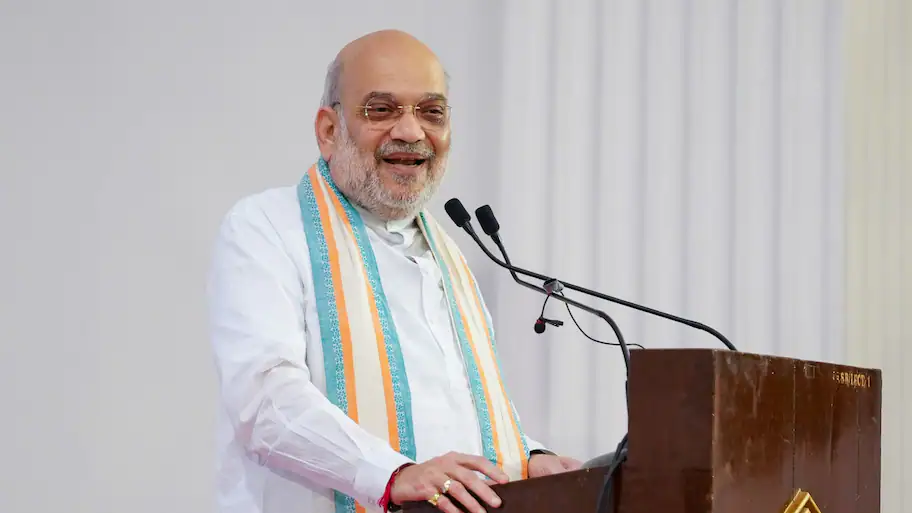
Union Home Minister Amit Shah on Sunday said the Uniform Civil Code (UCC) would be implemented in all 21 states governed by the BJP-led NDA before 2029, while asserting that India’s approach to terrorism and national security has undergone a major shift in recent years.
Addressing an event in Mumbai, Shah said the government had already introduced the UCC in several states and expressed confidence that the remaining NDA-ruled states would also adopt it before 2029. Earlier reporting noted: He said the government had strengthened the country’s criminal justice system through the Bharatiya Nyaya Sanhita and claimed that several States had recorded a 30% increase in the conviction rate in a single year. Earlier reporting noted: He said the government had ended five decades of Naxalism and signed more than 14 peace agreements in the country’s North-East region. Uttarakhand became the first state in the country to pass a UCC law in February 2024. Gujarat followed suit last year, while Assam became the first north-eastern state to pass the UCC Bill in May 2026.
Shah said the NDA, voluntary organisations and people across the country would participate in the initiative. He also said a system was being established to ensure justice could be delivered within three years. His remarks come as the BJP-led government continues to push the UCC as a major policy objective, alongside its focus on governance, national security and institutional reforms. The campaign will be conducted across states and Union Territories, districts, Lok Sabha and Assembly constituencies and down to the polling-booth level.
Earlier reporting noted: Madhya Pradesh became the latest state to unanimously approved the UCC in a special cabinet meeting in Bhopal’s Jagdishpura last month.
He also cited the government’s handling of Article 370, Naxalism and the situation in the Northeast as key areas where he said long-standing internal security challenges had been addressed.
“Operations such as the surgical strikes, air strikes, and Operation Sindoor have established a policy of zero tolerance towards terrorism, while security has been prioritised across various sectors,” he said. The Home Minister said India now had a robust policy to deliver a befitting response whenever Indian soldiers or citizens were targeted in terrorist attacks or conspiracies. The Home Minister said the country’s economic rise had been accompanied by a stronger approach to foreign and defence policy, with national interest at its core.
Shah also highlighted what he described as a decisive change in India’s security policy, pointing to operations such as the surgical strikes, air strikes and Operation Sindoor as examples of the country’s response to terrorism.
