
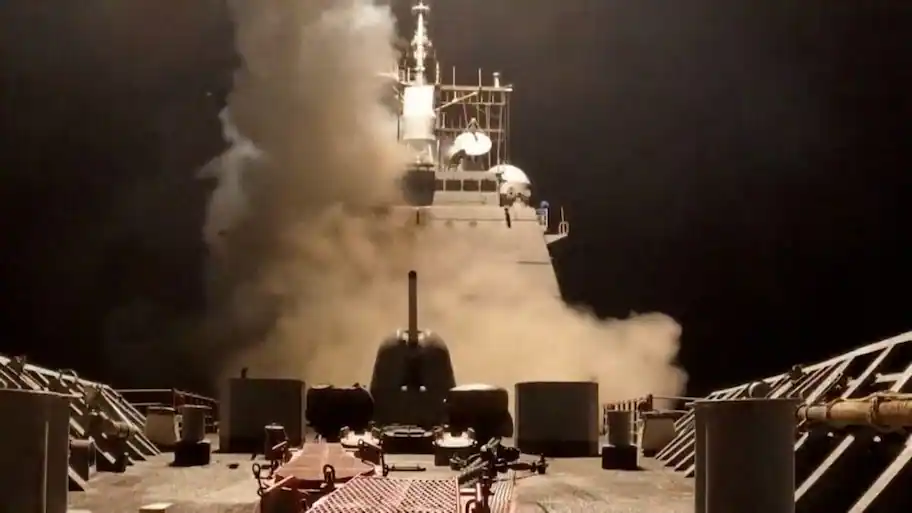
New Delhi: Crude oil prices are moving close to $100 a barrel. Fighting between the United States and Iran in the Persian Gulf, along with Houthi attacks on Saudi Arabia’s energy infrastructure, is raising fears over oil supplies.
The latest escalation came after the US military attacked five Iranian crude oil tankers on Tuesday (September 8). International benchmark Brent crude rose 2.4% from Monday’s closing price to $99.34 a barrel. It climbed another 1.5% in Tuesday morning trading to reach $99.44. Brent had reached $126 a barrel in late April before falling to around $70 in July.
The Iran-backed Houthis also stepped up attacks on Saudi energy facilities, making oil shipments from the region more difficult. The oil market has seen frequent swings this year as the military confrontation in the Middle East has changed the outlook for supplies. Prices began moving higher again from the end of August as tensions between Washington and Tehran increased. The two countries had reached an agreement in mid-June, which brought a period of lower tensions. The latest clashes have ended that period and brought uncertainty for oil markets.
Why India faces a tougher oil bill
On Saturday (September 5), the United States said it had targeted three Iranian crude oil tankers after Iran fired missiles at two American warships. The Iranian force also said early Wednesday (September 9) that it had launched ballistic missile strikes on the US Al-Azraq air base in Jordan, targeting maintenance and repair hangars, preparation facilities and fighter aircraft shelters. The last revision came on May 25, when petrol became Rs 2.61 per litre more expensive and diesel rose by Rs 2.71 per litre. The combined effect of the US-Iran conflict, attacks involving the Strait of Hormuz and the fighting around Saudi energy infrastructure has also pushed analysts to revise their oil price forecasts for the rest of this year and 2027. Eurasia Group has warned that a recovery in Chinese demand, together with the continuing deadlock in the Middle East, could push oil prices above $100 a barrel in the near term.
The country imports around 90% of its oil needs, which means higher international prices increase the amount of dollars needed to buy the same quantity of crude.
The United States Central Command (CENTCOM) said American forces destroyed five Iranian crude oil tankers. The CENTCOM said the tankers were part of an Iranian “shadow network” that provides funds to the IRGC and its regional partners. The US military said the crews were told to leave the vessels before the attacks. The CENTCOM said the US warship targeted by Iran was not hit and no American personnel were injured. The CENTCOM said one vessel and a guided-missile destroyer managed to evade the IRGC attack. Iran’s Revolutionary Guard later said it had targeted two US ships and eight oil tankers in response to the American attacks on Iranian tankers, claiming that the targets suffered heavy damage. It also said it had targeted 10 ships attempting to cross the “restricted and unsafe area” of the Strait of Hormuz. These companies have accumulated losses after being unable to pass the full increase in oil prices on to consumers following the West Asia crisis, according to PTI.
The action came after the Islamic Revolutionary Guard Corps (IRGC) allegedly targeted a US warship twice with ballistic missiles over two days. The tankers were targeted near Kharg Island, one of Iran’s main oil export centres. The United States has attacked eight Iranian oil tankers over the past four days. India is among the countries most exposed to a sustained rise in crude prices. New Delhi is the world’s third-largest oil importer and is directly affected by changes in international crude prices. Analysts say a prolonged rise in oil prices could increase India’s dollar import bill, worsen the trade balance and weaken the rupee. Higher crude prices can also feed into domestic inflation through fuel, transport and other energy-related costs. Petrol and diesel prices in India have not changed for more than three months. The latest rise in crude prices also affects fuel retailers such as the Indian Oil Corporation, the Bharat Petroleum Corporation Ltd and the Hindustan Petroleum Corporation Ltd. The Houthis, who are backed by Iran, have also increased attacks on energy infrastructure in the Middle East. Their actions against Saudi Arabia have increased the risks for ships passing through the Strait. The situation is making it difficult to move oil from terminals on Saudi Arabia’s eastern coast. Any prolonged disruption in the movement of crude and gas from the region could keep international prices high. The revisions are based on expectations that disruption to oil and gas supplies from the region could last for an extended period. With India importing most of its crude, every hike in international oil prices adds to the cost of securing the fuel needed by its economy.
