
It is also an important source of export income, with Nepal earning around $200 million each year by selling power to India and Bangladesh. New Delhi: Nepal has built its electricity sector around the rivers rushing down from the Himalayas. Almost all of the country’s electricity comes from hydropower.
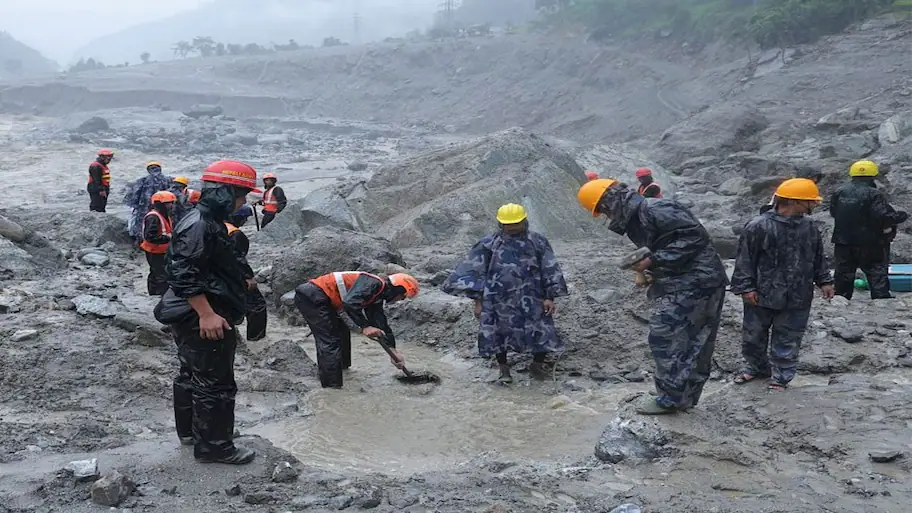
The scale of that risk became clear after the devastating flash floods on August 26, which swept through areas near the Nepal-Tibet border and crippled hydropower infrastructure along the Trishuli river basin. More than 1,300 people have died in the disaster, while thousands are still missing. Twelve hydropower plants in the Trishuli basin suffered heavy damage, putting more than 10% of Nepal’s total electricity generation capacity out of action. Six of the 12 affected plants belong to the state-owned Nepal Electricity Authority (NEA). Nepal’s power sector has undergone major changes over the past 15 years. In 2010, only about two-thirds of the population had access to electricity, while many households faced power cuts lasting up to 16 hours a day. By 2018, most parts of the countryn were getting electricity around the clock. The NEA says Nepal now has 225 hydropower plants with a combined installed capacity of more than 3,900 megawatts. That capacity is enough to supply around 3 million homes at the same time. The high-altitude Himalayan region is warming about 50% faster than the world average. Nepal’s Disaster Risk Reduction and Management Authority has reported that more than 90% of disasters recorded between 2018 and 2024 were climate-related.
The damage has also revealed Nepal’s heavy dependence on hydropower.
Plant operators said they do not yet know whether some of the damaged facilities can be brought back into operation. The authority has told domestic consumers that there is no immediate threat to electricity supplies. “It is time to rethink our hydropower policy,” he said. Former Energy Minister Kulman Ghising described the flood as a “once-in-a-century” event and said the damage should lead to changes in how hydropower plants are built and where they are located. The most important thing is to have early warning systems and robust emergency evacuation measures,” he told environmental news website Mongabay. Dhakal said a rethink of Nepal’s hydropower strategy could include reservoir-based plants that do not need to be built at high elevations. Renewable energy specialist Kushal Gurung, founder of cleantech company WindPower Nepal, said the country needs to develop other sources of electricity. This requires a change in energy policy, which presently gives hydropower too much importance,” he said.
The mountains and glaciers that make this possible are also exposed to a changing climate. Entire villages near the Nepal-Tibet border were washed away. Its spokesperson Rajan Dhakal has also acknowledged that the rise in climate-related disasters calls for a rethink of the country’s hydropower plans. The expansion of hydropower, combined with higher electricity imports from India to cover seasonal shortages and efforts to control corruption, helped change the situation. Hundreds of more projects are under construction or in the pipeline. Most are planned in mountainous areas, where fast-flowing streams can generate electricity without the need for large storage facilities. Climate risks are adding a new factor to those plans. An initial assessment of last week’s floods has attributed the disaster to the collapse of a glacier and its rocky covering. Scientists say it is too early to establish a direct link between the specific flood and climate change. “We need to design plants to be more resilient to floods. There are also fears that hundreds of workers, engineers and local residents could be trapped inside mud-filled tunnels at hydropower sites. Such projects can store water and release it when required, though they come with higher economic and environmental costs. “In such dangerous times, we should not put all our eggs in one basket. We need to seriously adopt alternatives such as solar and wind power.
A report by a German development agency found that Nepal’s technical potential for solar power is about 10 times higher than its hydropower potential. The Upper Trishuli-1 project, which is almost completely destroyed in last week’s floods, was one of Nepal’s largest foreign direct investment projects. It was estimated to cost around $647 million, with the Asian Development Bank and International Finance Corporation among its financiers. In September 2024, severe cloudbursts over the Trishuli and Bhotekoshi river basins caused flash floods in Rasuwa, Nuwakot and Dhading, the same areas that suffered heavy damage in last week’s disaster. In July 2025, a glacial lake burst in Tibet’s Gyirong County and sent floodwaters along the same river route into Nepal. At least 11 people were killed. Movement across the border was closed for six months and reopened on January 1 this year. Uttam Bhlon Lama of the Independent Power Producers Association of Nepal said insurers have paid around $40 million over the past three years to more than 20 private plants for flood-related damage.
Pushpa Sharma, a senior research fellow at the Institute of South Asian Studies at the National University of Singapore, agrees that Nepal should diversify its energy sources, while saying the scope for doing so is “only limited”. Citing comparative studies of renewable energy sources in the region, she said, “There is still untapped potential in solar and wind, but in reality, it is hydropower that gives Nepal a strong competitive advantage over its South Asian neighbours. Himanshu Thakkar, coordinator of the South Asia Network on Dams, Rivers and People, said international lenders “were fully aware of the extreme risk they were exposing thousands of workers, officials, residents, rivers, infrastructure and terrain to”. But they took no preventive steps, did not establish strong checking systems and were not prepared for the disaster they knew was likely to come,” he said. “We need to improve the way hydropower plants are constructed and operated,” he said. He warned that insurance premiums are rising and that operating costs are becoming “unviable”. Manjeet Dhakal, a member of Nepal’s climate delegation to the United Nations climate change conference, said the disaster shows that climate risks cross national borders and cannot be handled only by Nepal. He said governments and international organisations need to work together on data sharing, impact assessments and early warning systems. “Nepal is among the countries least responsible for the greenhouse gas emissions that have increased these risks,” he said. We should not be forced to face these risks alone,” he said.
Most large investments in the country’s energy sector are still going into hydropower. Climate campaigners have criticised continued funding for projects in areas where disaster risks had been identified. “Their own reports highlighted this. Thakkar referred to the history of disasters in the Trishuli basin. The area has experienced major floods in recent years. The flooding damaged important infrastructure and halted trade along the busy Nepal-China corridor. Dhakal acknowledged that even when climate risk assessments are carried out properly, hydropower projects may not always be built to match those findings. Private operators are feeling the financial cost. “The irony is that our hydropower industry is an effort to further reduce our very low emissions.
“Meaningful expansion of wind and solar generation is a resilience strategy that can limit the chances of future failure of concentrated or interconnected power systems,” he said. Vivek Shastri, a researcher at Columbia University’s Center on Global Energy Policy, also supports developing other renewable sources.
