
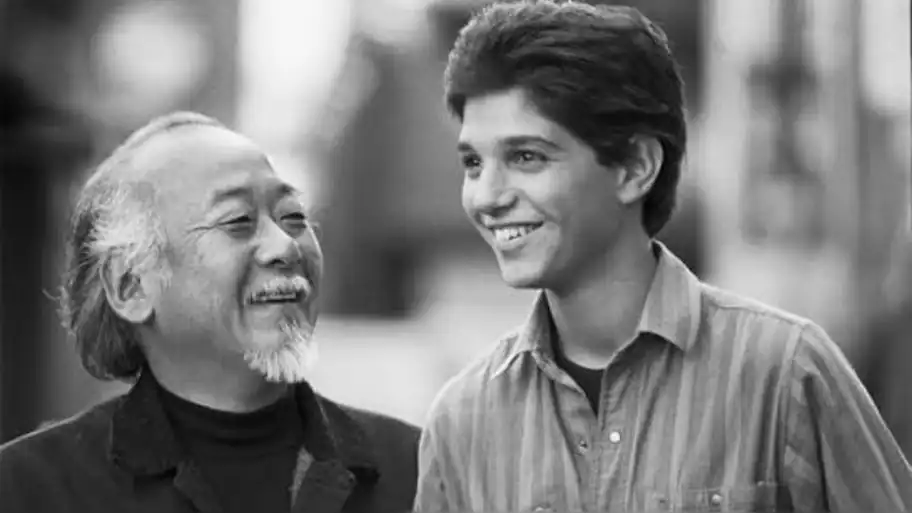
Dialogue of the Day: Mr Miyagi never really teaches Daniel the way Daniel expects to be taught. No dramatic lectures, no big speeches about discipline. Just small, oddly specific instructions that only make sense later. This line is one of the rare moments he actually explains himself, and even then, he keeps it short enough that you almost have to sit with it a while before it lands properly.
Released in 1984, with this particular line from its 1986 sequel The Karate Kid Part II, starring Ralph Macchio and Pat Morita as Miyagi, the franchise follows Daniel LaRusso, a teenager who’s taken under the wing of Mr Miyagi, a quiet, unassuming karate master with a teaching style built more on patience and life lessons than direct instruction. The films became known for treating mentorship as something built slowly, through small moments rather than grand speeches.
Because you’re eager to get to the impressive part, you can’t skip the boring, foundational part just. Because someone said so, but because that’s simply the order things happen in, not. “First learn stand, then learn fly. Nature rule, Daniel-san, not mine.” – Mr Miyagi, The Karate Kid Part II On the surface it’s about karate, about building basics before attempting anything advanced. But Miyagi isn’t really talking about kicks and stances here. He’s talking about a much bigger pattern, one that shows up in basically anything worth learning. That’s not a rule he made up to slow Daniel down. It’s just how learning actually works, whether anyone likes it or not. That last part matters more than it seems, “nature rule, not mine. Miyagi isn’t asking Daniel to trust him blindly, or follow some arbitrary system he invented for control. He’s pointing at something outside himself entirely, an order to things that exists whether or not either of them agrees with it. You don’t get to fly before you’ve learned to stand.
There’s a particular kind of patience being taught here too, one that’s easy to admire and pretty hard to actually practice. Most people, especially when they’re eager or frustrated, want to jump straight to the results. Daniel wants to be good at karate immediately. He doesn’t want to spend weeks on something that looks, from the outside, like it has nothing to do with fighting at all. Miyagi’s response isn’t to argue him out of that impatience. It’s just to point out, gently, that impatience doesn’t actually change how the process works. It’s a small line, but it captures something about real teaching in general, the kind that isn’t interested in shortcuts even when the student is begging for one. Miyagi isn’t withholding the fast version out of stubbornness. He knows there isn’t a fast version. Standing comes first. Flying comes later. No amount of wanting it sooner changes that order.
