
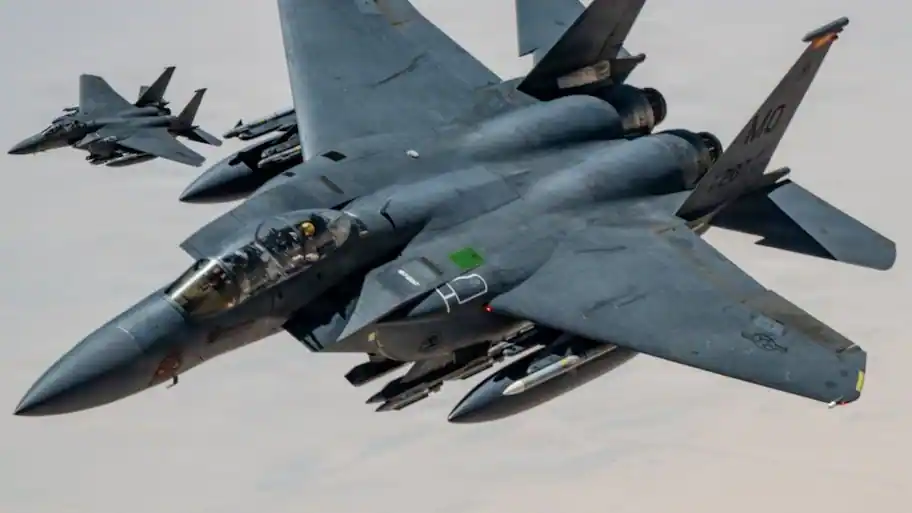
The United States has launched a fresh round of strikes against targets linked to Iran’s Islamic Revolutionary Guard Corps (IRGC), marking a renewed escalation between Washington and Tehran.
The White House said nearly 1,500 commercial vessels had travelled through the waterway under US protection, carrying 750 million barrels of crude oil to international markets. It also claimed that Iran had exported no oil from its shores since an American blockade resumed in July, adding that US forces had turned around 75 vessels that attempted to breach the blockade. It’s a steel wall… We control the Strait, 100%,” he added.
Because of its proximity to the Strait of Hormuz, a crucial maritime route for global energy shipments, the location is particularly significant. One of the reported strikes hit Iran’s Larak Island, where US forces targeted rocket launchers.
The operation followed recent attempted attacks by Iranian forces on commercial shipping in the Strait of Hormuz as well as on American service members deployed in the region, according to the US military. The development comes after Iran fired missiles towards US positions in Jordan, although the incoming missiles were intercepted, according to reports. The United Arab Emirates also said it intercepted an Iranian drone near its territory. CENTCOM said its wider operation targeted dozens of IRGC-linked sites, including military command centres, missile and drone facilities, coastal surveillance and defence positions, and maritime capabilities. The US said the objective was to reduce threats to American personnel, commercial shipping and neighbouring Gulf states. Qatari Prime Minister and Foreign Affairs Minister Sheikh Mohammed bin Abdulrahman bin Jassim Al Thani held talks with Iranian Foreign Minister Seyed Abbas Araghchi in Tehran on a proposed interim framework for the strait, the Ministry said. During the meeting, Sheikh Mohammed stressed “the need to respect the sovereignty of neighbouring countries and freedom of navigation”, while emphasising the importance of continuing diplomatic efforts to ease tensions and resolve differences through dialogue, Xinhua news agency reported. Araghchi, meanwhile, expressed appreciation for Qatar’s continued diplomatic efforts to de-escalate tensions and support dialogue, according to the statement. In a separate statement citing the US Central Command (CENTCOM), the White House said American forces were keeping global energy supplies moving while denying Iran revenue that Washington says could be used to threaten international commerce. Iranian mines have been cleared from international shipping lanes in the strait, according to the administration. Gulf oil exports have recovered to about two-thirds of the levels recorded before the US operation and continue to rise, the statement said. “The only one that has control of the Strait of Hormuz right now is the United States Navy,” Trump said on August 10. The White House said Trump would continue to apply pressure on Iran until the country was no longer able to threaten the international community.
The developments have once again placed the Strait of Hormuz at the centre of the US-Iran confrontation. Any disruption in the strategically vital waterway could have wider implications for international shipping and energy markets. US President Donald Trump has indicated that Washington could take further military action depending on how the situation develops, raising fears that the latest exchange could trigger another cycle of strikes and retaliation between the two countries. The renewed fighting comes after weeks of heightened tensions surrounding shipping in and around the Strait of Hormuz. With both sides now exchanging attacks again, the possibility of a broader regional escalation remains a major concern. Sheikh Mohammed’s visit to Tehran came amid ongoing Iran-Oman talks over the Strait of Hormuz. The administration presented these claims as evidence supporting President Donald Trump’s repeated statements that the US Navy had gained control of the Strait of Hormuz. The White House statement did not include a response from Iran. “We have a blockade that’s been infallible. Trump has repeated the assertion several times throughout August. However, it did not specify what military or diplomatic conditions would lead Washington to end the blockade. (with agencies input)
US Central Command (CENTCOM) said in an X post that the strikes began on Tuesday and were carried out against IRGC positions in Iran. Meanwhile, the Qatari and Iranian Foreign Ministers discussed on Thursday the establishment of a temporary shipping corridor through the Strait of Hormuz, along with a joint project to clear the strategic waterway of mines, according to a statement from Qatar’s Foreign Ministry. Iran’s Islamic Revolutionary Guard Corps (IRGC) said on Wednesday that Iran and Oman had reached agreements on their respective shares of the strait’s waters and revenues, according to Iranian media reports. On Thursday, he again said that the United States had control of the strait, while Iran was receiving nothing through it.
